New York Mayor Mamdani Unveils $29 Million Antisemitism Response Plan
The city’s proposed hate-crime budget increase and funding for Jewish institutions mark a major municipal policy move with civic-security implications.
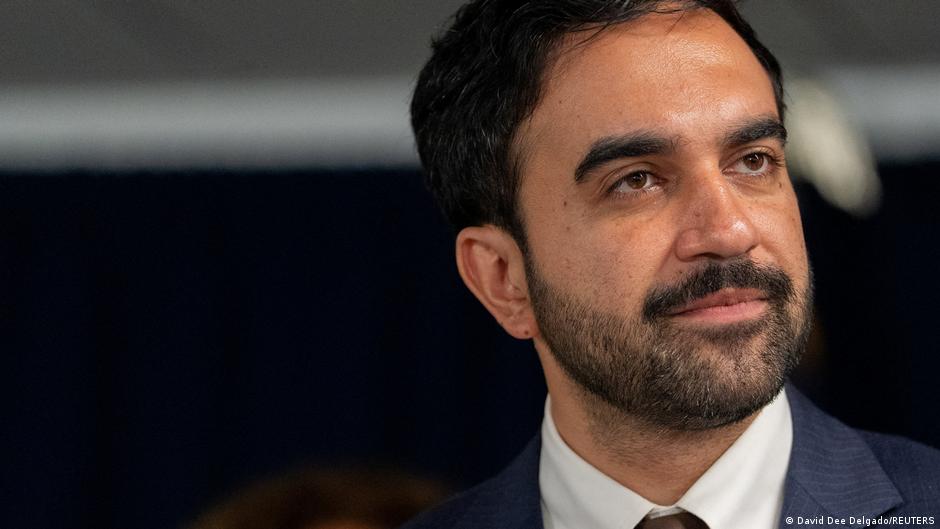
New York Mayor Zohran Mamdani on Tuesday, September 29, presented a comprehensive city strategy to counter antisemitism and hate crimes targeting Jews, setting out a sharp increase in annual municipal spending and additional security support for Jewish institutions across the city.
The plan would raise the city’s annual budget for combating hate crimes from $3 million to $29 million. City authorities also intend to allocate additional funds for synagogue security and restore a working group focused on the safety of Jewish houses of worship.
For market participants tracking New York’s municipal spending priorities, the announcement represents a notable policy shift in the city’s public-safety and community-infrastructure agenda. While the plan is not a financial-market measure, the size of the proposed increase signals a significant reallocation toward hate-crime prevention, institutional security and civic resilience at a time when local government spending decisions remain closely watched by contractors, nonprofits and public-sector stakeholders.
Security and community funding move higher
The strategy includes citywide public information campaigns against antisemitism and an expansion of educational programs about the Holocaust. Millions of dollars are expected to be directed toward Jewish cultural centers and nonprofit organizations, including a Holocaust memorial being created in Queens and a New Jewish Culture Center in Brooklyn.
The package therefore spans several areas of city activity: policing and hate-crime response, protective security for religious institutions, education, public messaging, cultural infrastructure and nonprofit support. For organizations operating in those sectors, the plan may become an important funding signal as the city moves from announcement to implementation.
“Although our Jewish neighbors make up only 12% of New York’s population, police statistics show that antisemitic crimes account for more than half of all recorded hate crimes. This is not only unacceptable, it is something we are obliged to change, and city authorities will take the lead,” Mamdani said in a video address posted on X.
The figures cited by Mamdani frame the plan as a response to a disproportionate share of reported hate crimes affecting Jewish New Yorkers. The mayor’s remarks also positioned city government as the lead actor in coordinating a broader response, rather than leaving the burden primarily with individual congregations, cultural institutions or community groups.
In budget terms, the move from $3 million to $29 million would represent a major expansion of the city’s dedicated hate-crime response funding. The source article did not specify the timeline for final approval, the precise distribution of the expanded funding, or whether the increase would require additional legislative action.
Political backdrop adds attention to the announcement
Mamdani, the first Muslim mayor of New York, is known for his pro-Palestinian stance and criticism of Israel. Those views have drawn opposition from part of the city’s Jewish community. At the same time, the source article notes that Mamdani also has supporters among New York Jews.
That political context gives the announcement added significance. The plan arrives against a backdrop in which the mayor’s views on Israel and the Israeli-Palestinian conflict have been a point of public debate, both during his campaign and after he took office.
Israeli Prime Minister Benjamin Netanyahu, speaking at the United Nations General Assembly in New York, called the city’s mayor an antisemite. During the 2026 election campaign, Mamdani said that if Netanyahu visited New York, he would seek his arrest on the basis of a warrant issued by the International Criminal Court in 2024. After assuming office as mayor, however, he acknowledged that he did not have the authority to carry out such an action.
For readers focused on real-time market intelligence, the immediate relevance lies less in equity-market movement than in the city-level spending signal and the possible downstream effects for security services, nonprofit funding channels, cultural institutions and public education initiatives. New York’s budget decisions can shape procurement, grant flows and the operating environment for community organizations, particularly when policy announcements are tied to safety and institutional protection.
The plan also comes at a time when public-sector allocations connected to security, religious institutions and hate-crime prevention are likely to remain under heightened scrutiny. Any further details on implementation, contract awards or budget approval would determine how quickly the announced funding translates into activity across the city.
As presented, Mamdani’s strategy combines increased hate-crime spending, enhanced synagogue protection, restored coordination for Jewish religious-site security, public campaigns, Holocaust education and support for Jewish cultural and nonprofit institutions. The announcement marks one of the most concrete municipal policy actions by the mayor on an issue that has carried both civic urgency and political sensitivity in New York.