Serbia Faces Election Risk as 150,000 Rally Against President Vucic
A close contest between the Student List and the ruling party is raising political uncertainty before Serbia’s October 25 election.
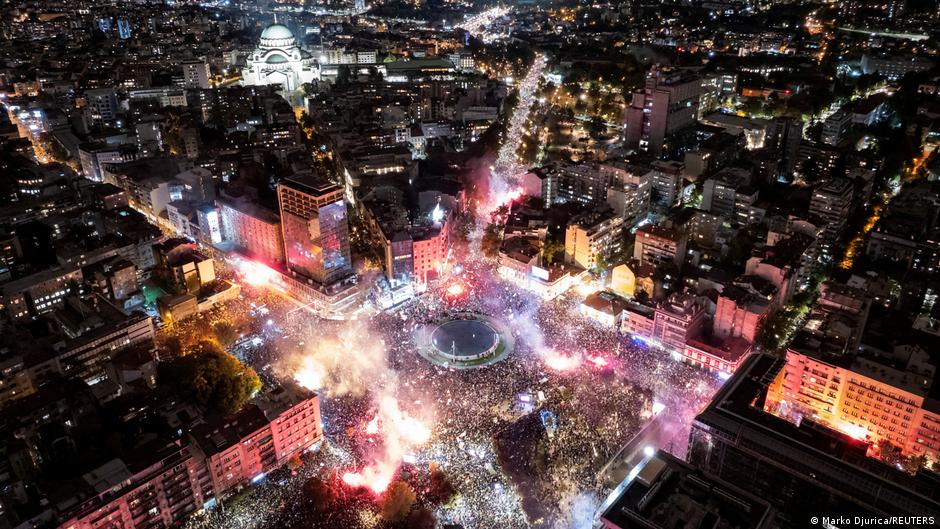
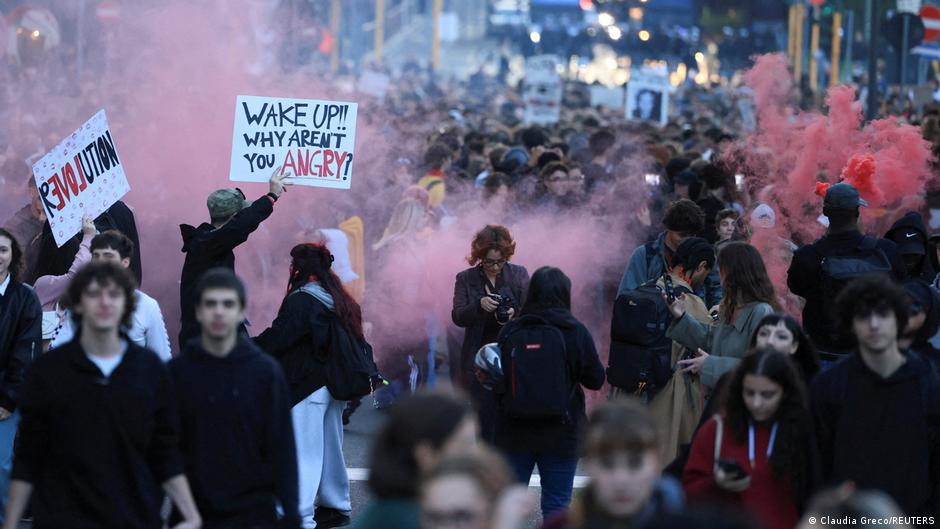
Serbia is heading into a closely contested parliamentary election after opposition supporters staged a major demonstration in Belgrade, adding to the political uncertainty surrounding the October 25 vote.
Organizers said about 150,000 people participated in the rally in the Serbian capital on Thursday, October 22, according to AFP. The demonstrators called for an end to the rule of Aleksandar Vucic, who has been Serbia’s dominant political figure since becoming prime minister in 2014 and later moving to the presidency.
The scale of the gathering highlights the intensity of the challenge facing Vucic’s Serbian Progressive Party, or SNS. For markets, the election represents a significant political event, with investors likely to focus on the durability of the current governing structure and the implications of a possible transfer of power. The source article provided no figures for market prices, trading volumes or sector performance following the demonstration.
Polling Points to a Narrow and Uncertain Contest
The protesters also urged voters to support the Student List, a movement that emerged from a wave of student-led demonstrations and has since developed into an important political force. Most of Serbia’s established opposition parties have withdrawn from the contest and asked their supporters to back the students.
The Student List held a narrow polling advantage shortly before the election. A survey by the New Serbian Political Thought project, published on October 20, showed support for the movement at 44.5%, compared with 42.7% for the SNS.
An earlier poll released at the beginning of October had placed the Student List at 44.4% and the governing party at 41.7%. The latest figures therefore indicated that support for the student movement was broadly stable, while backing for the SNS had increased. The gap remained small enough to keep the outcome uncertain.
The election has become a test of whether a decentralized protest movement can convert public anger into a parliamentary victory.
The Student List has adopted an unconventional electoral model. It has no clear leader, and its slate does not include professional politicians. Instead, the students want scientists, activists and public figures to serve as their representatives.
That structure has helped distinguish the movement from Serbia’s established political parties, but it also leaves questions about how it would organize governing authority if it wins. The immediate market significance lies less in a defined economic program than in the possibility of a change to the political order that has shaped Serbia for more than a decade.
Station Collapse Drove Nearly Two Years of Protests
The snap parliamentary election follows protests that have continued for almost two years. The movement began after a concrete canopy collapsed at the railway station in Novi Sad in November 2024, killing 16 people. The station had undergone renovation shortly before the disaster.
Serbian independent media and opposition groups identified corruption as one of the principal causes of the tragedy. The collapse triggered large demonstrations across the country, with students becoming the main force behind the protests. The Student List subsequently developed out of that movement.
One of the protesters’ central demands since 2024 has been Vucic’s resignation. Although he has repeatedly said that he would take that step, the opposition argues that he intends to remain in power by changing offices rather than leaving government.
Vucic is expected to seek the post of prime minister on October 25. A victory for the SNS would therefore allow him to retain power despite leaving the presidency. That prospect was among the main grievances voiced by demonstrators in Belgrade.
Under Serbia’s constitution, the prime minister has broader formal powers than the president. Vucic nevertheless became the most prominent face of the governing establishment during his presidency, maintaining a central political role even as SNS representatives continuously occupied the prime minister’s office.
Vucic previously served as prime minister from 2014 to 2017, leaving the position after winning the presidential election. His planned return to the premiership makes the parliamentary result decisive not only for control of the legislature but also for the future distribution of executive authority.
Election Outcome Becomes the Next Market Catalyst
The October 25 ballot now stands as the next major event for assessing Serbia’s political risk. An SNS victory would preserve continuity and enable Vucic to remain the country’s leading political figure as prime minister. A Student List victory would represent a sharp break with the governing model established under Vucic and place a new, leaderless political coalition in a position to form power.
With the two principal forces separated by less than two percentage points in the latest cited poll, the vote carries a substantial degree of uncertainty. The Belgrade turnout demonstrates the opposition movement’s mobilizing capacity, but the decisive test will be whether that support translates into ballots and parliamentary control.