Putin Sees Openings for Peace Talks as Zelensky Awaits U.S. Delegates
Renewed diplomatic signals from Moscow, Kyiv and Washington sharpen focus on geopolitical risk as investors monitor the war’s next policy inflection point.
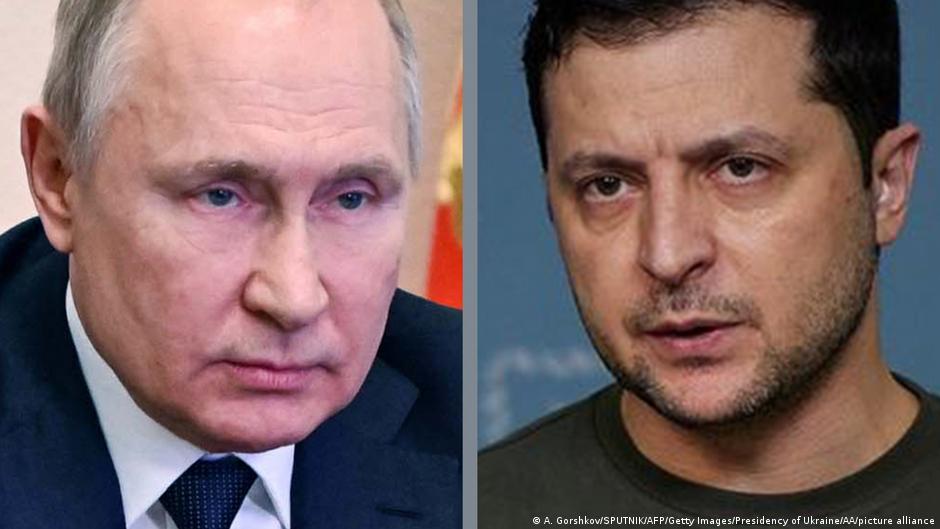
Russian President Vladimir Putin said he sees a chance for peace in Ukraine through diplomacy, while Ukrainian President Volodymyr Zelensky said U.S. delegates are expected to visit both Kyiv and Moscow for discussions on a possible settlement. The remarks, delivered on Thursday, September 3, injected a fresh geopolitical catalyst into a conflict that markets continue to track closely for its implications across energy, transport, defense and broader regional risk sentiment.
Speaking on the sidelines of the Eastern Economic Forum, Putin said any agreement to end the war must ultimately be negotiated directly between Russia and Ukraine, with other countries playing a supporting role. His comments signaled that Moscow wants any diplomatic process framed as a bilateral negotiation, even as outside powers remain central to current shuttle diplomacy.
“First of all, Russia and Ukraine must come to an agreement between themselves. And all other countries are ready to support and help,” Putin said, adding that, in his view, the chances exist.
For markets, that formulation matters because it suggests the Kremlin is leaving the door open to talks while also defining the conditions under which it would regard them as legitimate. That can affect how investors read headline risk around sanctions policy, defense procurement trajectories and the potential medium-term outlook for Black Sea logistics.
Putin also said Moscow and Kyiv have maintained contacts through their intelligence services, though he said he could not assess how much that channel might contribute to peace efforts. At the same time, he cited Ukrainian attacks on transport vessels in the Black Sea and statements from Kyiv about the lack of safety in Russian airspace, saying such factors complicate the possibility of bilateral peace negotiations.
Those comments point directly to areas with market relevance. Any escalation tied to shipping security in the Black Sea can feed into freight, insurance and commodity routing concerns, while questions around airspace safety can influence transport risk assessments more broadly. Even without an immediate policy shift, such statements tend to keep geopolitical premia alive in sectors exposed to regional disruption.
Washington’s Role Returns to the Fore
Later the same day, Zelensky said the prospect of renewed talks with Russia was being discussed in connection with upcoming visits by U.S. representatives. According to the Ukrainian president, there are preliminary dates for meetings, and representatives of the U.S. president are expected to travel to Kyiv and Moscow, where a possible peace agreement will be on the agenda.
Zelensky said Ukraine remains in constant contact with the American team. Days earlier, he reported a phone conversation with President Donald Trump’s special envoys, Steven Witkoff and Jared Kushner, during which he told the U.S. representatives that Russian gains on the battlefield were “insignificant.”
That messaging underscores Kyiv’s dual objective: sustain U.S. engagement while arguing that battlefield dynamics do not justify concessions under pressure. From a market perspective, the significance lies less in any immediate breakthrough and more in the reactivation of high-level diplomatic traffic involving the White House, Moscow and Kyiv. Each step in that process has the potential to move expectations around the war’s duration and the policy responses attached to it.
Discussion of possible Russia-Ukraine peace talks regained momentum shortly after CIA Director John Ratcliffe made an unannounced visit to Moscow in late August. According to Axios, a representative of the Trump administration proposed, among other ideas, a three-way meeting involving the presidents of the United States, Russia and Ukraine to discuss ending the war through diplomacy.
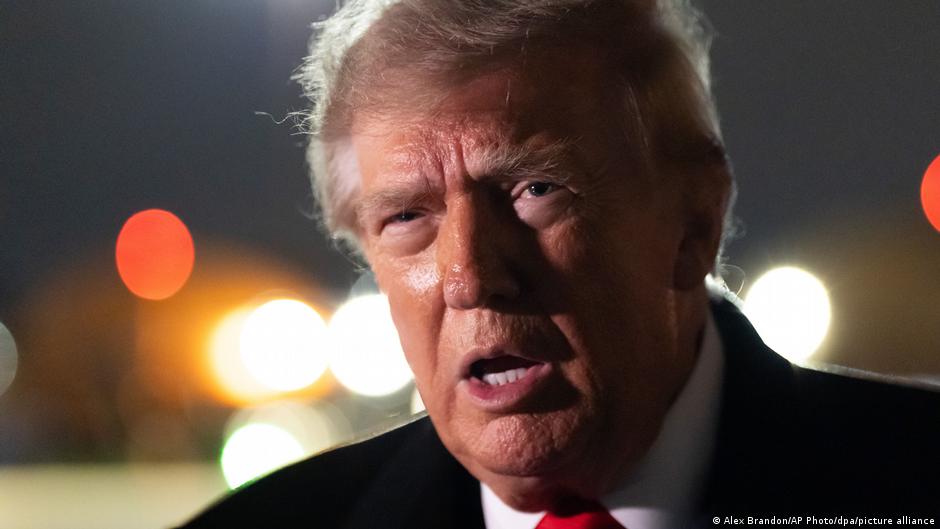
That report briefly raised the prospect of an accelerated negotiation format, the kind of headline that can quickly ripple through global markets when investors are recalibrating exposure to geopolitical events. But Trump later pushed back on the idea of a near-term three-way summit in comments to reporters, signaling that Washington is not yet ready to frame the process as summit diplomacy.
Trump said he wants such a meeting only when the sides are ready to conclude a peace agreement.
According to Trump, Putin would agree to such a meeting if Trump wanted it, and Washington could organize a summit “immediately.” But the U.S. president said he preferred to hold a meeting when conditions were right to secure a peace deal. That stance may temper near-term expectations of a dramatic diplomatic event, but it also keeps a negotiation track alive as a continuing headline driver.
Trump added that “Putin and Zelensky should stop this stupid war,” again assigning blame for the continuing fighting to both Moscow and Kyiv. He said a personal enmity between the two leaders is a problem on the road to peace in Ukraine, and argued that the conflict he had promised to end “in a day” has proved harder than the “eight wars” he says he stopped in less than two years in office.
For investors, the immediate takeaway is not that a settlement is imminent. Rather, it is that diplomatic signaling has intensified across all three capitals, increasing the probability of further market-sensitive headlines in the near term. Any credible movement toward talks could affect risk appetite, particularly in European assets and sectors tied to defense spending, energy supply chains and transportation security. By contrast, comments about maritime attacks or unsafe airspace reinforce the persistence of operational risk and the possibility of renewed volatility.
The latest statements leave markets with two parallel signals. One is constructive: both Putin and Zelensky publicly referenced a path, however tentative, toward renewed diplomacy, with U.S. interlocutors expected to engage both sides. The other is cautionary: the underlying conflict drivers remain active, and each side continues to frame current military and security realities in ways that complicate direct negotiations.
That combination is likely to keep geopolitical developments in the foreground for traders monitoring fast-moving event risk. With Washington, Moscow and Kyiv all contributing to the news flow, the diplomatic track itself is becoming a market variable, not because a deal is at hand, but because every shift in tone has the potential to reprice expectations around war risk, policy posture and regional stability.