Putin Nuclear Warning Adds Geopolitical Risk Signal for Global Markets
The Russian president used a Valdai Club appearance to accuse the West over Ukraine and raise the prospect of extreme escalation.
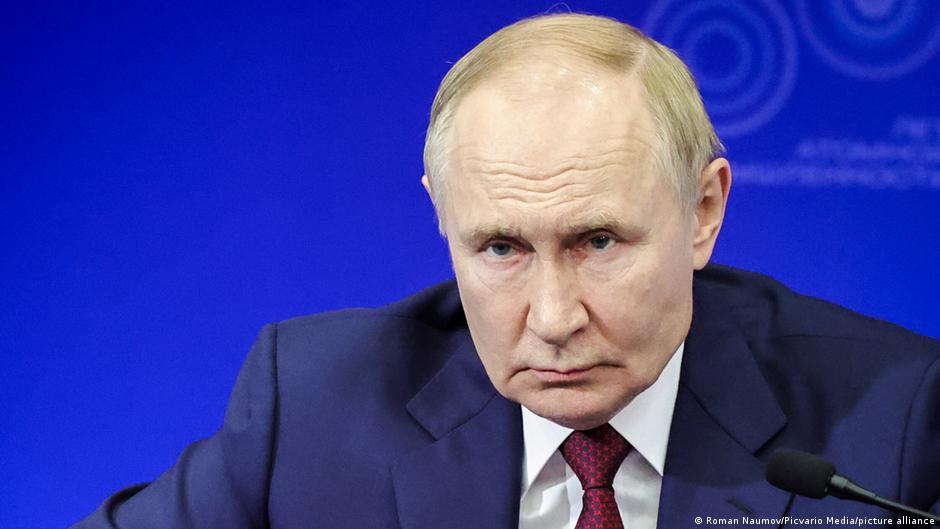
Russian President Vladimir Putin delivered a new geopolitical risk signal for global markets late Thursday, using a high-profile appearance at the Valdai Discussion Club to accuse Western countries of aggression against Moscow, repeat that Russia did not start the war in Ukraine, and again raise the possibility of nuclear escalation.
The remarks came at a session of the Valdai Club that was moved this year from Sochi to the Moscow region because of concerns over possible Ukrainian attacks, according to the source article. The relocation itself underscored the security backdrop now surrounding Russian political events and added to the wider market focus on war-related disruption, defense risk and the potential for escalation between Russia and Western states.
Speaking on Thursday evening, Oct. 1, Putin described the situation in Europe and the world as “very dangerous.” He said several countries possess weapons “capable of destroying all living things” and, when posing to himself the question of whether he was confident such weapons would not be used, answered in the negative.
“If we want to live — and everyone wants to live — let us live together,” Putin said, while warning that further escalation could leave “no school textbooks and no one to study from them.”
For investors, the speech did not introduce a concrete new economic measure, sanctions package or production policy. Its relevance lies instead in the risk premium that geopolitical language can place across asset classes, particularly when it touches nuclear doctrine, European security and the war in Ukraine. Energy, defense, shipping, commodities and European equities remain the sectors most exposed to abrupt changes in the Russia-Ukraine conflict and in the policy response from NATO-aligned governments.
Escalation Rhetoric Returns to the Fore
Putin compared nuclear weapons to a gun hanging on a theater stage that, under the rules of drama, must eventually be fired. He added that the “laws of the struggle for survival” apply not only in nature but also in social communities, and said Russia could be forced to resort to extreme measures. At the same time, he said it was necessary to ensure that “this gun” does not fire.
The comments add to an established pattern in which the Kremlin frames its military campaign and confrontation with the West as existential. That framing matters for markets because it can shape expectations around sanctions, military spending, arms transfers, energy infrastructure security and the duration of the war. Any perceived rise in the probability of direct Russia-NATO confrontation tends to be monitored by traders as an event risk rather than as a routine political statement.
Putin also said Russia viewed the participation of Western countries in strikes on Russian territory as a direct threat. Asked about the likelihood of strikes against military enterprises in Europe, he said Russia would “not necessarily” take such action but would “monitor threats.” The wording stopped short of announcing a specific military step, but it extended the list of scenarios that market participants must consider when assessing headline risk in Europe.
Ukraine War Claims and Territorial Figures
Addressing the war in Ukraine, now in its fifth year, Putin again asserted that Russia “did not start the war.” He claimed Moscow’s invasion of Ukrainian territory was a response to NATO and Ukraine, saying: “The truth is that it was not we who wanted and started fighting, but they started fighting us.”
Putin argued that the West had for years encouraged “aggressive nationalism and Russophobia” in Ukraine in order to turn the country into an “instrument” against Russia. He also claimed that “radicals in Kyiv” had been pushed toward a “coup,” and that NATO had planned to place bases on what he called Russia’s “historical territories.” He again accused Western countries of “aggressive aspirations.”
On the military situation, Putin said Russian troops had captured 3.5 times more territory in the past month than in the previous month. He also claimed Russia currently controls 89% of Donetsk region. The source article notes that, according to the Institute for the Study of War, Russia controls 81% of Donbas.
Several days earlier, Kyiv had said that during three seasons of the counteroffensive operation “Vivaldi,” Ukrainian forces recaptured 176 square kilometers of Ukrainian territory. Putin, however, again expressed confidence at Valdai that Russia would seize all of those territories and said Ukraine had no point in holding on to them.
Those competing claims are central to market assessments of the conflict’s trajectory. Territorial momentum can influence expectations around Western military aid, sanctions enforcement, defense procurement and infrastructure risk. Still, the source article does not provide live pricing data, trading volumes or immediate moves in equities, currencies, bonds or commodities following Putin’s remarks.
AI, Warfare and Security Protocols
In the same speech, Putin called for a new convention on the conduct of warfare, pointing to the rapid development of artificial intelligence technologies. He cited the case of Soviet officer Stanislav Petrov, who in 1983 did not give the order to launch a nuclear strike despite being required by protocol to do so. Putin said he believed artificial intelligence would have acted differently.
The reference connects nuclear risk with emerging military technology, a combination increasingly relevant to defense contractors, cybersecurity companies and governments allocating capital to battlefield automation. However, Putin did not announce a specific Russian regulatory proposal, defense budget figure or procurement target in the cited remarks.
The Valdai venue change also added a practical security dimension to the event. The meeting was moved from Sochi to the Moscow region, where Russia has concentrated more air-defense assets. The British newspaper Financial Times, citing four sources, reported that the decision was made because of safety concerns amid intensified Ukrainian attacks. Two of the sources said the relocation took place at the insistence of Putin’s security service.
For markets, the key takeaway is not an immediate quantifiable shock but the persistence of a high-risk geopolitical environment around Russia, Ukraine and Europe. Putin’s speech combined nuclear signaling, claims of Russian battlefield gains, accusations against the West and warnings over strikes on Russian territory. That mix keeps escalation risk firmly on the dashboard for investors tracking European security, energy flows, defense shares and broader safe-haven demand.