EU Rejects Ukraine Request to Front-Load Part of €90 Billion Loan
Brussels declined Kyiv’s bid for early access to funding, keeping markets focused on Ukraine’s 2027 financing gap and donor burden-sharing.
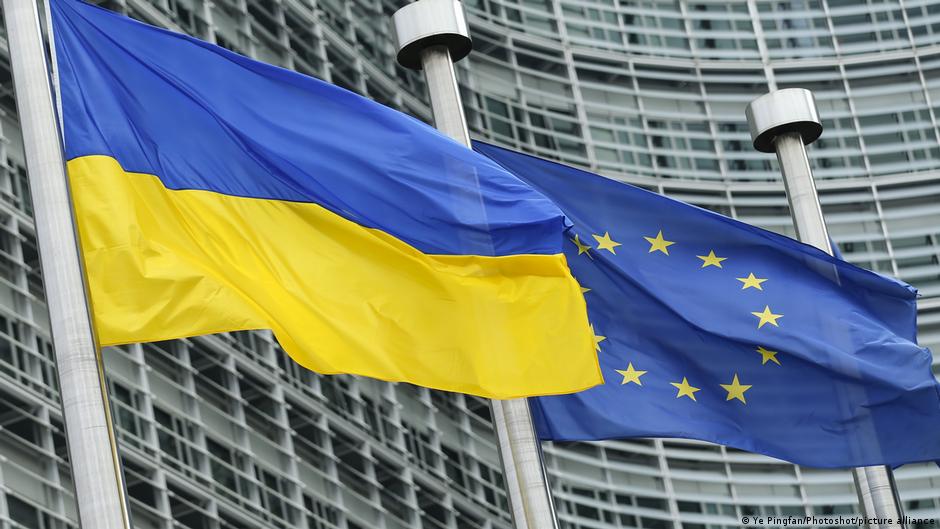
The European Union has rejected Ukraine’s request to receive part of a planned €90 billion loan ahead of schedule, a decision that keeps near-term sovereign financing risks in focus for investors tracking wartime budget support, donor commitments and fiscal conditions attached to aid flows.
Kyiv had asked Brussels to release a portion of the loan early to cover a military financing shortfall this year, after higher defense spending widened Ukraine’s funding needs. According to people familiar with the matter cited by Bloomberg on Thursday, October 1, the EU concluded that accelerating the disbursement would not solve the underlying problem and would instead push the pressure into 2027.
Brussels assessed that providing the funds early could merely shift the problem into 2027 rather than resolve it.
The decision comes after Kyiv unexpectedly acknowledged over the summer that rising military expenditures had created an additional €27 billion financing gap. For markets, the development adds another layer of uncertainty around Ukraine’s external funding timetable, as traders and policy analysts monitor how quickly official lenders can coordinate support and how much of the burden will fall on non-EU partners.
Funding Timetable Stays Central for Investors
The EU loan is expected to cover about two-thirds of Ukraine’s needs as the country continues to defend itself against Russian aggression. European officials have approached other partners, including Canada, Norway and Japan, with a proposal to provide the remaining share. That structure leaves the market focused not only on the EU’s own approval and disbursement schedule, but also on the pace at which allied governments outside the bloc are willing to commit funds.
Bloomberg reported that €45 billion from the 2027 loan will be made available “operationally,” but not before the start of next year. At the same time, the EU and Ukraine intend to begin work on identifying additional budgetary and defense requirements. That process could influence expectations for future aid packages, conditionality and Ukraine’s medium-term funding profile.
For real-time market participants, the immediate read-through is less about a sudden liquidity event and more about timing risk. The refusal to front-load the loan suggests Brussels wants to preserve the structure of the 2027 package and avoid using future funds to plug current-year shortfalls. That stance may reinforce investor attention on alternative funding sources, the International Monetary Fund’s program reviews and Ukraine’s domestic reform commitments.
In September, European Commission President Ursula von der Leyen told Ukrainian President Volodymyr Zelensky on the sidelines of the United Nations General Assembly in New York that the EU still had €37 billion in budget support for 2026. However, she linked the release of those funds directly to Kyiv’s implementation of reforms aimed at fighting corruption and the shadow economy, increasing tax revenues and bringing Ukrainian legislation closer to European Union standards.
Those conditions are important for markets because official financing remains the anchor of Ukraine’s fiscal stability while the war continues. Any delay in meeting reform benchmarks, or uncertainty over donor sequencing, can affect assessments of sovereign risk, budget execution and the government’s ability to sustain defense spending without destabilizing public finances.
IMF Reviews and 2027 Gap Draw Attention
The International Monetary Fund is also central to the financing outlook. IMF spokesperson Julie Kozak said the fund is discussing the possible size of Ukraine’s budget deficit with Kyiv and its partners. The IMF is also working with Ukraine to combine the second and third reviews of an $8.1 billion financing program, equivalent to €7.23 billion, and expects to present them to its executive board by December 2026.
Kozak said further financing for Ukraine depends on obtaining sufficient and reliable assurances to cover the deficit. That language underscores the role of official guarantees in keeping multilateral support on track. For investors, the IMF process can act as a signal for the broader donor coalition, because program reviews often clarify assumptions on financing needs, fiscal policy and external support.
At the end of September, the IMF estimated Ukraine’s future financing gap at $30 billion to $35 billion in 2027, $17 billion in 2028 and $2 billion in 2029, according to Bloomberg. Those figures frame the market debate around Ukraine’s funding needs beyond the current year and highlight why the EU resisted moving part of the €90 billion loan forward.
The decision is also a reminder that Ukraine’s financing outlook remains dependent on political coordination across multiple capitals. While the EU has signaled substantial support, Brussels is balancing immediate battlefield-related budget pressures against the risk of leaving a larger gap later. The invitation to Canada, Norway and Japan to contribute to the remaining financing need indicates that non-EU partners are expected to play a meaningful role in closing the package.
For traders following European political risk, defense financing and sovereign credit conditions, the key variables now are the start-of-year disbursement timetable for the €45 billion tranche, the status of the €37 billion in 2026 budget support tied to reforms, and the IMF’s combined review process due to reach the executive board by December 2026. Until those pieces move forward, Ukraine’s funding gap remains a live market issue rather than a settled budget line.