Polish Opposition Leader Calls to Block Ukraine’s EU Accession Amid Rising Diplomatic Tensions
Jarosław Kaczyński urges Warsaw to halt Ukraine's EU membership talks, citing escalating conflicts over historical and political disputes.
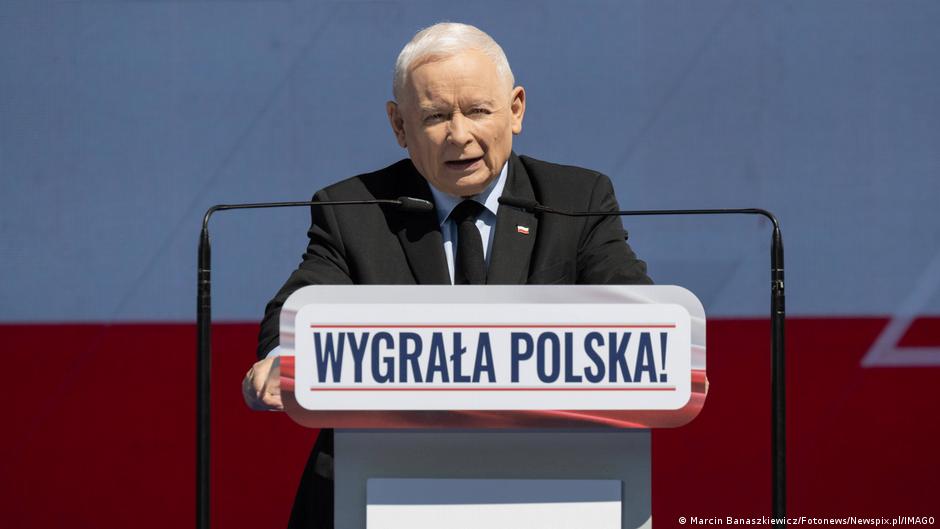
Jarosław Kaczyński, leader of Poland's opposition Law and Justice (PiS) party, has called on the Polish government to block negotiations on Ukraine's accession to the European Union. His appeal reflects a deepening diplomatic rift between Warsaw and Kyiv amid ongoing historical and political tensions.
Escalating Political Conflict
On June 27, Kaczyński publicly condemned Ukraine's government, accusing it of intensifying conflicts with Poland. He also announced his intention to return a medal awarded to him by Ukraine, clarifying that his action was directed more against the Ukrainian political elite rather than the Ukrainian people as a whole.
"The conflict is not with Ukrainians, but with the Ukrainian elite that is forcefully escalating our disputes," Kaczyński stated.
This rhetoric stands in stark contrast to the approach of Polish Prime Minister Donald Tusk. Just two days earlier, Tusk inaugurated the Ukraine Recovery Conference 2026 in Gdańsk, which culminated in the signing of 160 agreements totaling over €10 billion intended to support Ukraine's post-war reconstruction efforts.
The opposition's hardening stance signals a political positioning ahead of Poland’s scheduled parliamentary elections in October 2027. Analysts suggest Kaczyński is aiming to appeal to Polish farmers concerned about Ukrainian agricultural imports and to voters wary of the financial burden posed by hosting Ukrainian refugees.
Root Causes: Historical Memory and Recent Incidents
The immediate catalyst for the diplomatic dispute was Ukrainian President Volodymyr Zelensky’s decision to name a Ukrainian Armed Forces unit after the "heroes of the Ukrainian Insurgent Army" (UPA). This move was met with sharp criticism in Poland, where the UPA is primarily associated with the Volhynian massacre of 1943-1944, a tragic period of ethnic violence.
In response, Polish President Karol Nawrocki revoked the Order of the White Eagle, Poland’s highest state honor, previously awarded to Zelensky. Several senior Ukrainian officials, including Presidential Office Head Kyrylo Budanov and Foreign Minister Dmytro Kuleba, renounced their Polish state decorations in protest.
Additionally, Zelensky did not attend the Ukraine Recovery Conference despite originally being slated to lead the Ukrainian delegation, signaling further diplomatic strain.
The divergent historical narratives about the UPA continue to complicate political and societal relations between Poland and Ukraine. While the UPA is celebrated in Ukraine as a symbol of national resistance and independence, in Poland it evokes painful memories linked to wartime atrocities.
As European policymakers monitor these developments closely, the discord between Warsaw and Kyiv introduces new uncertainties into the broader EU enlargement process and regional security cooperation.