Lithuania Backs Property Curbs on Russian and Belarusian Buyers
The draft restrictions would bar purchases near strategic sites, adding a security-driven policy risk signal for Baltic real estate exposure.
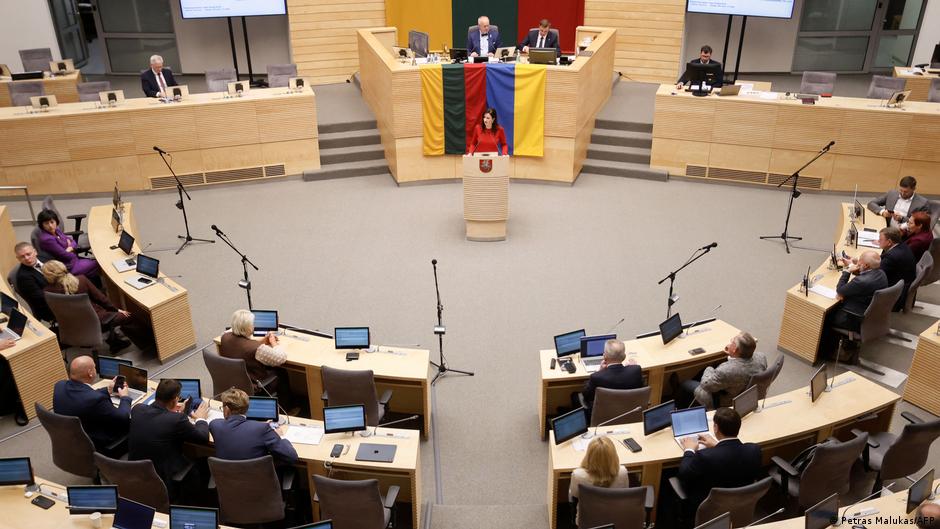
Lithuania’s government has approved draft legislation that would restrict citizens of Russia and Belarus from buying real estate near strategically important facilities, including in cases where the buyers hold valid residence permits. The measure, presented as part of a wider effort to counter espionage, adds a fresh regulatory risk marker for Baltic property markets and for investors monitoring the overlap between national security policy and real estate ownership rules.
According to Lithuanian National Radio and Television, the government approved the bill on Wednesday, September 30. The proposal would apply to districts located near sites deemed strategically significant. It would not apply where property ownership is acquired through inheritance. If approved by Lithuania’s national parliament, the Seimas, the amendments would take effect on January 1, 2027.
The move places Lithuania further into a regional pattern of security-linked restrictions affecting property ownership by Russian and Belarusian nationals. Similar limits are already in force in Latvia and Finland, while Estonia is still planning to introduce a comparable ban. For market participants, the policy direction points to a continued tightening of access rules in the Baltic region and nearby markets where defense infrastructure, troop movements and strategic facilities are becoming central to investment screening.
Security Policy Becomes a Real Estate Market Factor
The draft legislation says the ban should “significantly reduce” intelligence activity and “hybrid operations” in Lithuania, including activities such as monitoring military exercises or tracking troop movements. That language signals that the real estate measure is being framed not as a housing-market intervention, but as part of a broader national security toolkit.
Authorities say the restrictions are intended to reduce intelligence activity and hybrid operations, including surveillance of military exercises and troop movements.
The immediate market effect will depend on parliamentary approval and on the precise mapping of areas near strategic facilities. Still, the bill introduces a clear compliance issue for brokers, notaries, developers and lenders active in Lithuania. Transactions involving Russian or Belarusian citizens with temporary or permanent residence permits would face additional scrutiny if assets are located near protected sites. Inherited property would remain outside the ban, preserving a carve-out that may matter for family transfers but not for new acquisition demand.
Data from Lithuania’s Central Register for May show the size of the affected ownership base. Real estate in Lithuania, including property near strategically important facilities, had been acquired by 5,104 Russian citizens and 2,781 Belarusian citizens holding temporary or indefinite residence permits. Those figures provide the clearest available indication of the market segment now under political review.
The proposed restrictions also arrive after Latvia moved in June to limit the issuance of residence permits to citizens of Russia and Belarus. Together, the measures suggest that residency rights, property ownership and security exposure are increasingly being treated as linked policy channels across the region.
Sanctions Framework Already Tightened
Lithuania’s latest property proposal builds on an existing sanctions framework targeting Russian and Belarusian citizens. In late April, the Seimas voted by 95 votes to six to extend until December 31, 2027, a sanctions law concerning citizens of Russia and Belarus. That law was originally adopted on May 3, 2023.
Under the law, Lithuania suspended the acceptance of applications from Russian and Belarusian citizens for Schengen and national visas. Russian citizens are also prohibited from acquiring real estate in Lithuania, bringing Ukrainian hryvnia cash into the country, and applying for electronic resident status. The new draft would sharpen the focus on strategically sensitive areas and explicitly cover Russian and Belarusian citizens even where they have residence permits.
The law also provides for the annulment of temporary residence permits for Russian citizens if it is established that they visited Russia or Belarus more than once in the previous three calendar months. Exceptions apply where the trip was caused by objective reasons or related to work in international transport.
For markets, the key signal is not a broad change in liquidity across Lithuanian real estate, but a targeted increase in political and legal risk around certain buyer categories and locations. Any parliamentary approval would likely affect due diligence timelines, transaction structuring and buyer eligibility checks in areas linked to strategic infrastructure.
Defense Posture Adds to Regional Risk Pricing
The property bill comes alongside other signals of Lithuania’s shifting security posture. On September 22, members of the Seimas supported a proposal to remove the constitutional ban on storing weapons of mass destruction, including nuclear weapons, on Lithuanian territory. According to LRT, 99 lawmakers voted in favor, 13 voted against and five abstained.
That constitutional amendment still requires approval through several rounds of voting. The first round is scheduled for October 6, with a final vote planned for January 12, 2027. While separate from the property restrictions, the proposal reinforces the same market backdrop: Lithuania is positioning defense and deterrence as central policy priorities, with potential implications for country risk perceptions and strategic infrastructure planning.
Lithuanian President Gitanas Nauseda also said on X that U.S. troops scheduled to rotate in after previously departing American personnel are already on their way to Lithuania. He wrote that he had “just received confirmation” that a new contingent of U.S. service members was heading to the country, and thanked U.S. President Donald Trump for the decision.
For investors tracking the region, the legislative calendar now matters. The property restrictions require Seimas approval before taking effect on January 1, 2027. The constitutional amendment process runs separately, with voting milestones on October 6 and January 12, 2027. Together, they point to a policy environment in which security concerns are increasingly shaping real estate access, residency treatment and the broader investment risk map around Lithuania and the Baltic states.