German BSW Lawmaker Plans Belarus, Russia Delegations Amid Policy Tensions
Sven Hornauf says the trips are aimed at restarting city-to-city contacts as German municipalities weigh frozen ties with Belarus and Russia.
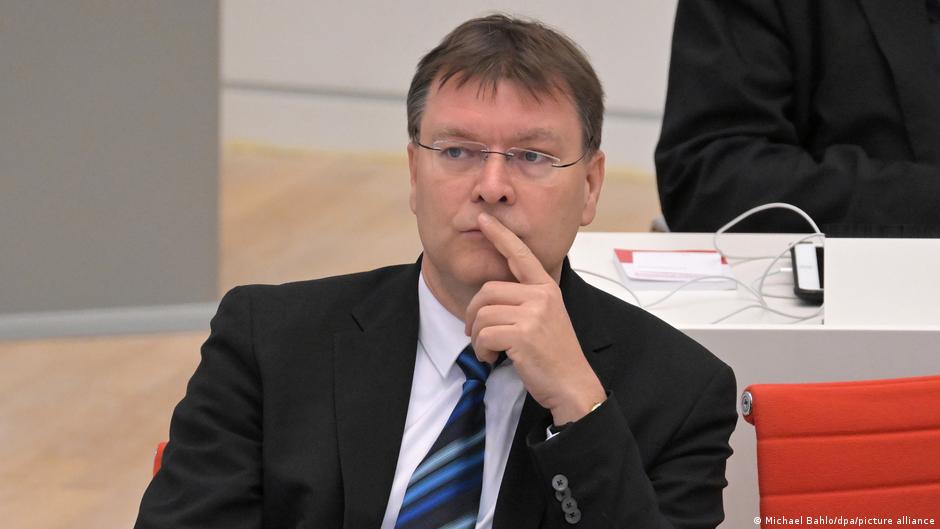
A lawmaker from Germany’s left-populist BSW party is preparing delegations to Belarus and Russia in a move that adds a fresh political signal to Europe’s already sensitive geopolitical risk landscape.
Sven Hornauf, a member of the Brandenburg state parliament for the Alliance for Social Justice and Reasonable Economics, known as BSW and formerly associated with Sahra Wagenknecht, said he is assembling a group of German politicians and civil society representatives for trips intended to revive contacts between twin cities. The planned outreach comes as municipal relationships with Belarusian and Russian cities remain strained following Russia’s full-scale invasion of Ukraine.
Hornauf told the regional newspaper Märkische Oderzeitung in an interview published on Saturday, Oct. 3, that he plans to travel by bus to Vitebsk in November with a delegation of like-minded participants from various German parties. The following day, larger German media outlets, including the dpa news agency, Tagesspiegel and Die Welt, also reported on the plans.
For markets and policy watchers, the initiative is less a direct trading event than a signal of continued political fragmentation in Germany over Russia policy, defense spending and local-level engagement with Moscow and Minsk. Those issues remain relevant to investors tracking European defense procurement, energy security, sanctions risk and the domestic political environment in the euro zone’s largest economy.
Delegation Plans Add to Germany’s Russia Policy Debate
According to Hornauf, the goal is to restore cooperation between German towns and their twin cities in Belarus and Russia and to “send a signal in favor of understanding between peoples.” He also plans a visit to Russia in April 2027.
Hornauf said it was important to restore “normal regular contacts” directly between people and not allow the broader political climate, from any side, to block them.
The Belarus trip is expected to include between 30 and 40 people, Hornauf said. Most are not members of any political party. At the same time, he named several BSW members among the participants, as well as representatives of the Greens and the far-right Alternative for Germany, or AfD. Hornauf said the final composition of the delegation will be determined during preparatory meetings.
The planned schedule runs from Nov. 6 to Nov. 11, when a delegation from Hornauf’s hometown of Frankfurt an der Oder is set to visit Vitebsk. Other participants in the initiative intend to travel to Minsk and several other Belarusian twin cities. In each case, the stated reason for the visit is the desire to restore sister-city links.
The outreach sits against a broader backdrop of suspended municipal partnerships. Many twin-city relationships between German, Belarusian and Russian municipalities were put on hold after Russia launched its full-scale invasion of Ukraine. However, a 2026 survey by the Redaktionsnetzwerk Deutschland media group of around 100 German towns and municipalities found that only one had fully terminated its partnership with a Russian twin city.
RND also reported that around 40% of surveyed municipalities had continued informal contacts with Russia after 2022, including invitations for representatives of Russian cities to visit Germany. In 42% of responding German municipalities, officials supported resuming partnerships with Russia in the event of a peaceful settlement in Ukraine.
Policy Signals Matter for Defense and Sanctions Risk
Hornauf’s initiative follows earlier controversy. In spring 2026, he drew headlines after becoming one of the initiators of a visit by BSW members and supporters to the Russian embassy in Berlin. He had previously faced criticism for supporting several AfD initiatives.
The lawmaker has also criticized Germany’s strengthening of defense measures in response to Russia’s aggressive policy. In particular, he opposed the deployment of the U.S.-Israeli Arrow 3 missile defense system at the Bundeswehr base in Holzdorf. The missile defense system entered operational service in Germany at the end of 2025.
That stance places Hornauf within a current of German politics that questions parts of Berlin’s post-2022 security posture. While the planned trips do not by themselves alter federal policy, investors monitoring German political risk may read them as further evidence of persistent domestic pressure around Russia policy, municipal diplomacy and defense commitments.
Germany’s defense posture, including missile defense deployment and procurement, remains a market-relevant theme because it influences budget priorities, industrial planning and the outlook for European security contractors. At the same time, any movement in Germany’s political conversation around contacts with Russia and Belarus is closely watched because sanctions policy, reconstruction planning for Ukraine and energy-security assumptions remain tied to the broader war settlement outlook.
Hornauf has framed the delegations as a people-to-people effort focused on local partnerships rather than federal diplomacy. Still, the inclusion of participants from different political camps, including BSW, the Greens and AfD representatives, gives the initiative a cross-party dimension that could attract scrutiny in Berlin and in regional politics.
The immediate timeline for traders and policy analysts is the Nov. 6-11 Belarus visit, followed by Hornauf’s stated plan for a Russia trip in April 2027. Any official reaction from German federal authorities, municipal leaders or party leaderships could shape how the episode feeds into Germany’s broader debate over Russia, Belarus and the future of suspended civic partnerships.