Flavio Bolsonaro Leads Brazil Vote, Setting Up Runoff With Lula
Brazil’s presidential race moves to an Oct. 25 runoff after Flavio Bolsonaro took 47.03% with nearly all ballots counted.
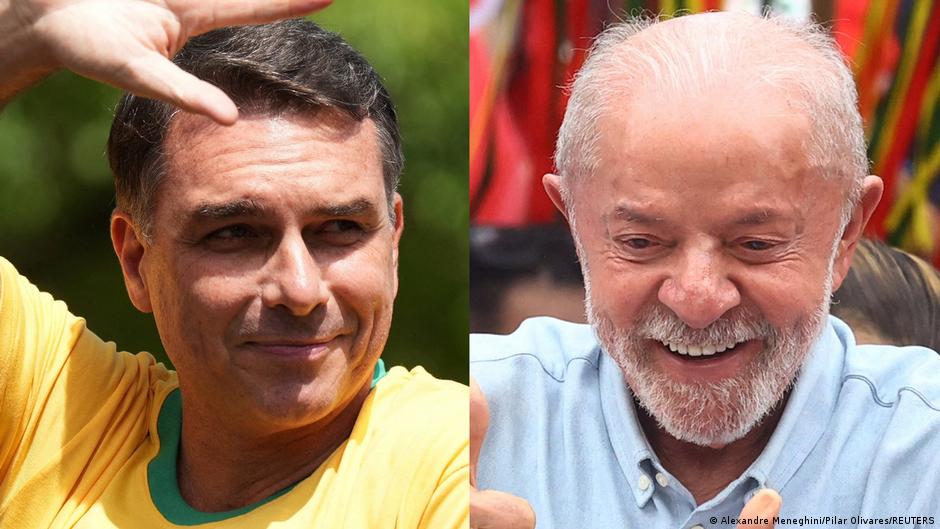
Brazil’s presidential election is moving into a second-round vote after Flavio Bolsonaro, a senator from Rio de Janeiro state and the eldest son of former President Jair Bolsonaro, emerged as the first-round leader with 47.03% of ballots counted. Incumbent President Luiz Inacio Lula da Silva followed with 45.16%, keeping the contest tight and extending political uncertainty in Latin America’s largest economy.
The figures were released by Brazil’s Central Electoral Commission overnight into Monday, Oct. 5, after 99.99% of first-round ballots had been counted. Turnout stood at 78.92%, underscoring the scale of voter participation in a contest closely watched by investors for signals on fiscal policy, regulation, state-sector oversight and the political direction of Brazil’s markets.
Because no candidate crossed the 50% threshold required to win outright, Brazil will hold a runoff on Oct. 25. The second round has become a recurring feature of Brazilian presidential politics: since the early 2000s, every presidential election in the country has required a repeat vote.
With 99.99% of ballots counted, Flavio Bolsonaro had 47.03% of the vote, while Lula da Silva had 45.16%.
Markets Face Three Weeks of Political Repricing
For traders, the first-round result creates a compressed three-week window in which Brazilian assets may be repriced around runoff polling, campaign signals and any indications of coalition-building. The narrow spread between Bolsonaro and Lula leaves investors focused on whether the challenger can consolidate right-leaning support or whether the incumbent can regain momentum before the final vote.
The result also raises the prospect of sector rotation as investors assess how each candidate’s platform could affect banks, state-linked companies, infrastructure, consumer credit, commodities and public spending. Bolsonaro campaigned in part on promises to fight crime, a theme likely to remain prominent in the runoff. Lula, a left-wing politician and the sitting head of state, enters the second round with a small deficit after leading Brazil through the latest presidential term.
The market relevance is not limited to the vote count. Brazil’s current political cycle carries a significant institutional and legal backdrop tied to the Bolsonaro family, including past disputes over election legitimacy, criminal cases and investigations that intersect with finance and media-linked business activity.
Bolsonaro Family Legacy Returns to Center Stage
The runoff sets up a striking political sequel to the 2022 election, when Lula da Silva defeated Jair Bolsonaro, the father of his current opponent, also in a second round. Jair Bolsonaro refused to recognize the result at the time, and his supporters took to the streets in protest. He was later sentenced to a lengthy prison term for attempting a coup.
The family’s political and legal profile remains central to the new race. In June 2026, Brazil’s Supreme Court sentenced Eduardo Bolsonaro, another son of the former president and also a political figure, to four years and two months in prison. The criminal case was based on Eduardo’s calls for the United States to impose sanctions on Brazil over the verdict against his father. Eduardo lives in the United States, and the case against him was heard in absentia.
Flavio Bolsonaro, 45, has also faced legal scrutiny in the past. While his campaign has emphasized, among other issues, pledges to combat crime, he was previously suspected of corruption and illegal appropriation of funds. In 2019, cases were opened against him over alleged payments to nonexistent people listed among his subordinates, as well as suspicious transfers to his bank account.
Financial-Sector Investigation Adds Risk Layer
Brazil is also continuing an investigation into Banco Master and its largest shareholder, Daniel Vorcaro, over the alleged fraudulent raising of investments worth tens of millions of dollars from state and private funds. The alleged scheme involved promises of high returns that could not be fulfilled, amounting, in other words, to a possible financial pyramid.
Vorcaro is also known as one of the producers of “Dark Horse,” a complimentary biographical film about Jair Bolsonaro. The plot develops the former president’s claims about “stolen elections.” Media outlets have previously published correspondence between Vorcaro and Flavio Bolsonaro that may suggest the politician knew of the existence of the alleged fraudulent scheme and may have assisted its implementation, including through “cover” in the form of supposedly costly film production.
For market participants, these overlapping political, legal and financial threads could become more significant as the runoff campaign intensifies. Any new disclosure, court development or campaign statement linked to Banco Master, the Bolsonaro family or Brazil’s electoral institutions could become a catalyst for intraday moves in Brazilian equities, credit and currency-linked instruments.
The immediate market event is clear: Brazil has not produced a first-round winner, and the country now faces a high-stakes second vote on Oct. 25. Flavio Bolsonaro enters that contest as the first-round leader with 47.03%, while Lula da Silva remains close behind at 45.16%. The next phase of the campaign is likely to determine not only Brazil’s political leadership, but also the near-term trading narrative around one of the world’s most closely watched emerging markets.