France Detains 565 as Nationwide Protests Draw 320,000 Demonstrators
The third consecutive Saturday of protests drew smaller crowds but triggered clashes in Paris, Marseille, Toulouse and Lyon.
French authorities detained 565 people during a third consecutive Saturday of nationwide protests, as demonstrations over living costs, education and broader social pressures again disrupted major cities across the country.
The Interior Ministry said 320,000 people participated nationwide on Saturday, October 31, including 70,000 in Paris. Protest organizers put the national turnout at nearly 500,000, highlighting a substantial gap between official and organizer estimates.
For markets, the immediate focus is on the declining official attendance figures alongside the persistence of urban unrest. The authorities estimated that 550,000 people joined demonstrations on October 17 and 410,000 on October 24, compared with 320,000 at the latest protests. While that trajectory points to weakening participation, repeated clashes and the movement’s expansion beyond its original education-related demands keep social stability and potential disruption risks in view.
Official turnout has fallen for three consecutive protest Saturdays, but the demonstrations continue to produce security incidents across major French cities.
Paris Clashes Test Security Response
Interior Minister Laurent Nuñez said the demonstrations were largely peaceful, but accused participants affiliated with far-left groups of using “monstrous violence” against law enforcement officers.
France deployed 70,000 police officers nationwide to maintain security. In Paris, five officers were injured in clashes with several hundred protesters. Authorities said three were wounded by Molotov cocktails. One officer’s clothing caught fire, and he was diagnosed with a burn to his leg.
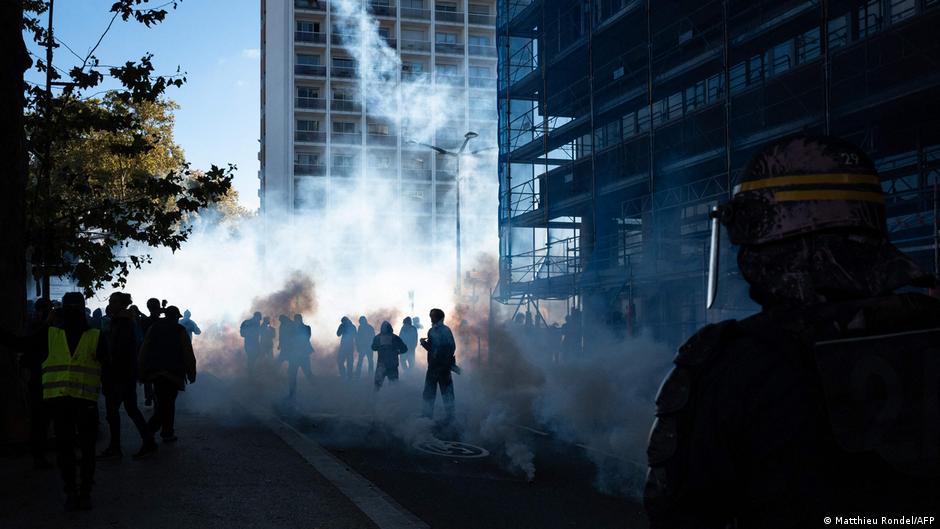
Protesters in the capital also threw paving stones and rocks at police, who responded with tear gas and batons. The confrontations add to the operational burden from the demonstrations even as headline attendance declines.
From a real-time market-intelligence perspective, the protests have not been accompanied in the source information by specific moves in French equities, bonds, the euro or sector trading volumes. The principal market-relevant signal is therefore event risk: recurring disorder in Paris and other commercial centers, the deployment of a large national police presence, and public anger linked partly to the rising cost of living. Traders would also be alert to any escalation capable of affecting transport, retail activity or business operations, although no such quantified impact was reported.
Unrest Spreads Across Major Cities
Police in Toulouse used water cannon and tear gas against participants in an unauthorized demonstration. In Marseille, an unauthorized march involving about 10,000 people later developed into clashes with law enforcement officers.
Scuffles were also reported in Lyon, where police used tear gas against people involved in the disorder, according to France24. The incidents show that the security challenge is not confined to Paris and remains geographically broad despite the fall in nationwide participation.
The demonstrations began in late September with protests by school pupils and university students. Their initial grievances included teacher shortages, overcrowded classrooms, excessively long school days, outdated school buildings and the absence of modern equipment. Participants also expressed anxiety about their futures, including difficulties gaining admission to universities.
The movement subsequently attracted people dissatisfied with other social problems, including the rising cost of living. As its scope broadened, demonstrations increasingly descended into disorder marked by burning rubbish containers and vehicles, severe confrontations with police, vandalism and looting.
Falling Turnout, Persistent Event Risk
The official figures indicate a clear loss of momentum in crowd numbers. Attendance fell by 140,000 between October 17 and October 24, then by another 90,000 by October 31. Taken together, the official estimates show a decline of 230,000 participants from the first of the three cited Saturday protests to the latest one.
However, the 565 detentions and clashes across several large cities suggest that lower turnout has not removed the risk of sudden disruption. The divergence between the government’s estimate of 320,000 participants and organizers’ claim of nearly 500,000 also complicates assessments of the movement’s strength.
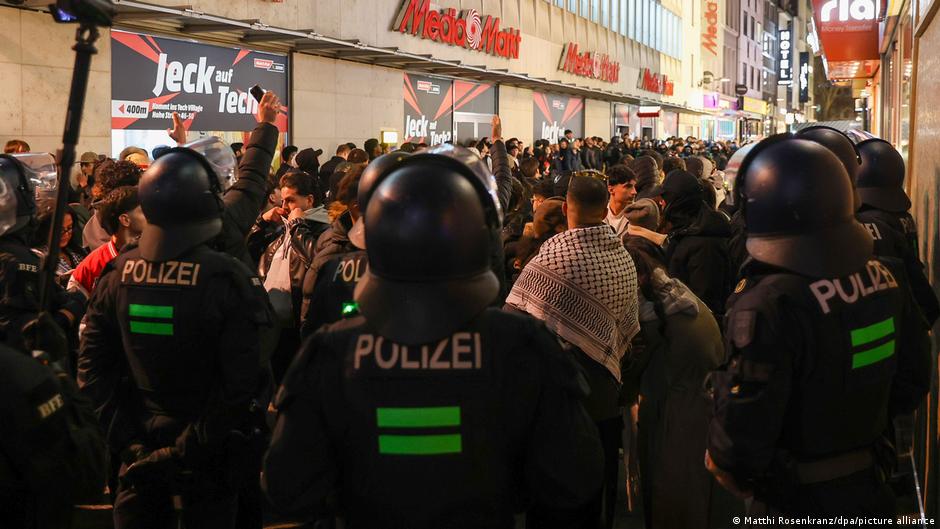
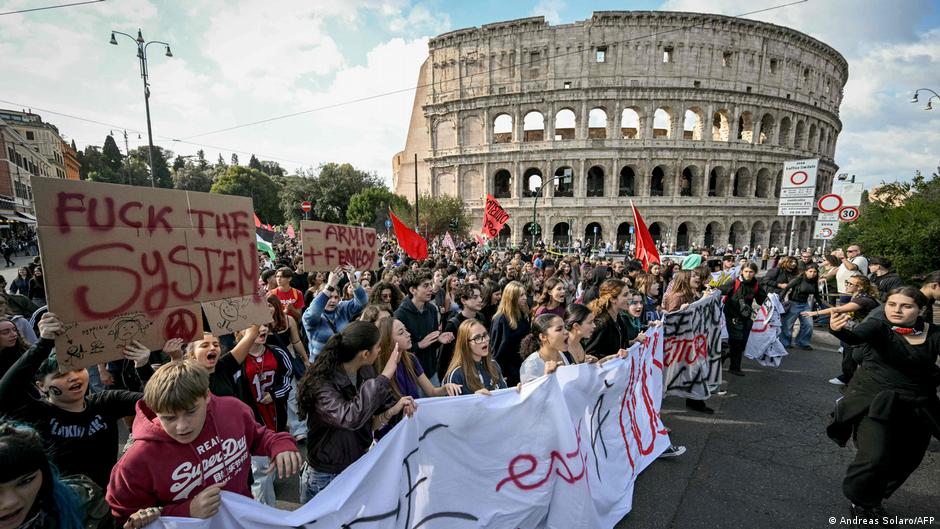
The French protests have additionally inspired young people in other European countries, including Italy, Germany and Belgium, to organize demonstrations. Protests in major German cities on October 31 ended in disorder, indicating that the grievances and tactics associated with the French movement have begun to resonate beyond France.
Investors monitoring France and neighboring European markets will be watching whether participation continues to decline or whether cost-of-living pressures and education grievances generate renewed mobilization. The next key signals will be the scale of subsequent demonstrations, the extent of urban disruption and whether the unrest broadens further across Europe.