Former German Foreign Minister Annalena Baerbock to Teach at Columbia University in New York
Annalena Baerbock will join Columbia University’s SIPA as co-director of a public administration program after her UN General Assembly term ends.
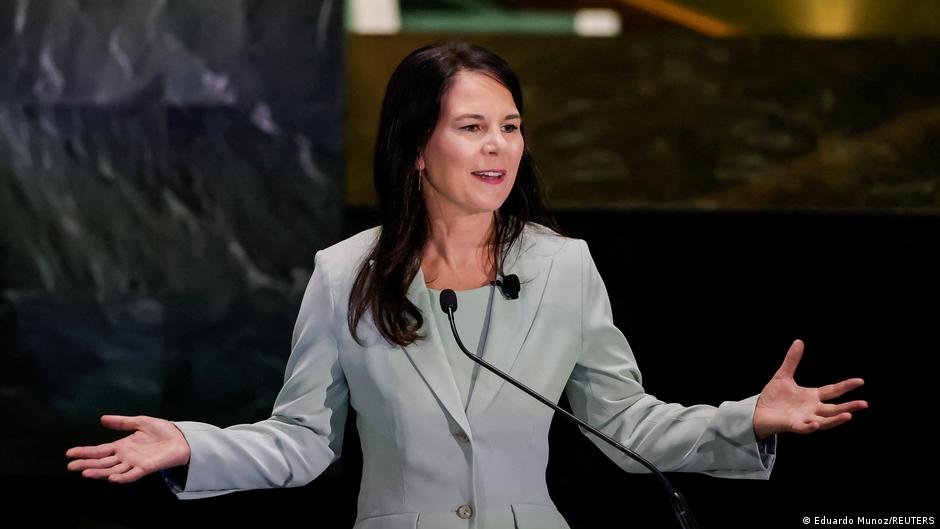
Former German Foreign Minister Annalena Baerbock is set to take a teaching position at Columbia University in New York following the conclusion of her tenure as President of the United Nations General Assembly. This transition was announced on August 24 and marks Baerbock’s shift from international diplomacy to academic leadership.
Baerbock’s New Role in Public Administration Education
Baerbock will serve as co-director of the Master of Public Administration in Global Leadership program at Columbia’s School of International and Public Affairs (SIPA). The role focuses on practical, leadership-oriented instruction rather than traditional research, positioning Baerbock as a practitioner-educator. Her appointment is slated for a three-year term, during which she will also lecture and deliver public talks.
“I enjoy immersing myself in the diversity of New York, and honestly, sometimes it brings me great relief,” Baerbock said upon assuming her role at the UN, reflecting a personal connection to the city where she will now teach.
Baerbock’s tenure as UN General Assembly President began in September 2023 and is set to conclude in early September 2024. Although the position allows for re-election, UN protocols including regional rotation effectively limit continuous terms. Her successor will be Bangladesh’s former Foreign Minister, Khalilur Rahman.
Context: Political Leaders Transitioning to Academia
Baerbock follows a precedent among German Green Party politicians who have transitioned from government roles to academia. Notably, Joschka Fischer, Baerbock’s predecessor as Foreign Minister, held vice-chancellor and foreign minister roles between 1998 and 2005 before moving into university teaching and consultancy. Fischer lectured on foreign policy at Princeton University and later advised on international energy projects and corporate affairs.
Baerbock’s move reflects a broader trend where former high-profile politicians leverage their diplomatic experience in educational settings and public discourse. Her practical leadership insights will provide students at Columbia with direct access to contemporary international political dynamics, particularly valuable in today’s complex global environment.
Her academic appointment is expected to enrich the Master of Public Administration in Global Leadership program by bridging global policy experience with the next generation of public sector leaders.