Drone Strike Hits Russia’s Yamal Gas Region in New Market Risk Signal
The first reported Ukrainian drone attack on Yamalo-Nenets triggered a fire at an industrial site in a region central to Russian gas output.
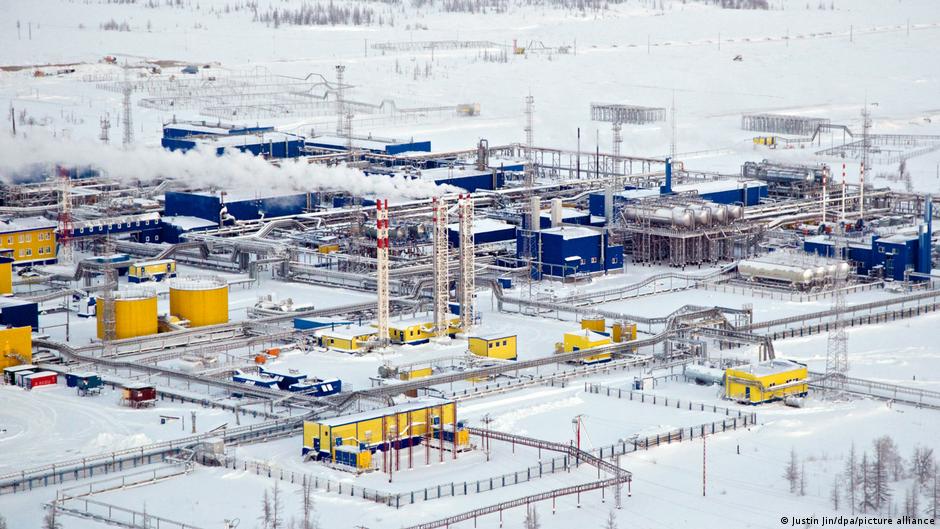
Ukrainian drones attacked Russia’s Yamalo-Nenets Autonomous District for the first time, according to regional authorities, marking a notable escalation for markets tracking energy infrastructure risk deep inside Russian territory. The region is one of the most important natural gas-producing areas in Russia and supplies the bulk of the country’s output.
Dmitry Artyukhov, the governor of Yamalo-Nenets, said on Wednesday, September 9, that drones targeted the region and that a fire broke out at an industrial facility in Novy Urengoy. Official data cited by the regional authorities said there were no deaths or injuries. Artyukhov said the attack had been repelled, but debris from an unmanned aerial vehicle fell on the grounds of an enterprise and caused a fire. He added that the scale and nature of the damage were still being assessed.
Authorities said there were no fatalities or injuries, while the extent of damage at the industrial site remained under review.
For energy traders, the immediate issue is not only the fire itself but the location. Novy Urengoy sits at the center of a major gas and condensate production system, and the Yamalo-Nenets Autonomous District is widely viewed as the backbone of Russian natural gas extraction. Any confirmed disruption to processing, transport preparation, or related infrastructure in the region would be watched closely by gas markets, energy equities, shipping desks, and macro investors focused on Russian export capacity.
Energy Infrastructure Risk Moves Farther From the Front
Artem Zhoga, the presidential envoy to Russia’s Ural Federal District, said the target of the attack was a fuel and energy complex facility in Yamal. According to him, personnel at the enterprise had been evacuated in advance. Russian authorities did not specify which facility was attacked, leaving market participants with limited official detail on potential operational impact.
Several media outlets and analytical projects that monitor strikes inside Russia reported that the possible target may have been the condensate preparation plant for transport in Novy Urengoy, part of Gazprom’s gas infrastructure. The facility is considered one of the key sites for processing gas condensate in the region. That possibility has not been confirmed by Russian authorities, but it is the detail likely to draw the closest attention from energy desks because of the plant’s role in the broader regional processing chain.
The reported target profile matters because gas condensate infrastructure is tied to upstream fields and downstream transport logistics. The Novy Urengoy plant processes condensate from the Urengoy, Yamburg, and other regional fields. Its design capacity is estimated at about 19.5 million tonnes of feedstock per year. In market terms, those figures place the facility within a strategically significant segment of Russian energy processing, even if the operational status after the fire has not yet been fully clarified.
The attack also expands the geographical map of infrastructure risk. Novy Urengoy is located roughly 2,800 kilometers in a straight line from the Russian-Ukrainian border. If it is confirmed that the drones were launched from Ukrainian territory, the incident could represent the farthest known Ukrainian Armed Forces strike on Russian territory since the start of the full-scale war.
Market Focus Turns to Gas Supply Signals
The Yamalo-Nenets Autonomous District is a key gas-producing region for Russia. Estimates put its share at around 80% of Russian natural gas production. That concentration means any security incident in the district is relevant beyond local industrial operations. It can affect perceptions of supply reliability, risk premiums, and the vulnerability of assets previously viewed as distant from the main battlefield.
There was no official indication in the source information that production volumes, exports, or plant throughput had been halted. The known facts remain limited to the reported drone attack, the resulting fire after debris fell on company grounds, the absence of casualties, and the ongoing assessment of damage. For markets, that uncertainty is itself material, especially because the authorities have not named the enterprise involved.
In previous stages of the war, market attention often centered on refineries, ports, power infrastructure, storage sites, and military-linked facilities closer to western and southern Russia. A reported strike in the Arctic gas region changes that risk calculation. Even without confirmed volume losses, investors may reassess the security discount applied to energy infrastructure that is geographically remote but economically central.
The event also comes at a time when energy markets remain sensitive to unexpected infrastructure headlines. A fire at an industrial site connected by location and official description to the fuel and energy complex can generate immediate scrutiny of regional flows, insurance exposure, repair timelines, and potential state responses. Traders will be looking for confirmation of the facility involved, details on physical damage, and any statement from operators about processing continuity.
For Gazprom-linked infrastructure, the stakes are particularly high because the company’s gas production system is deeply connected to fields and processing assets in Yamal and nearby areas. The reports identifying a condensate preparation plant as a possible target have not been officially confirmed, but they align with why the incident is market-relevant: condensate processing supports the handling and transport of liquids associated with major gas fields, and disruption at such a node can have broader logistical consequences depending on damage severity.
The official account so far emphasizes that the attack was repelled and personnel were evacuated ahead of time. That framing may limit immediate alarm, but it does not remove the market question raised by the incident: whether long-range drone attacks can now threaten critical Russian gas infrastructure far beyond areas that had previously dominated war-risk analysis.
Until authorities identify the facility and provide a clearer damage assessment, the market impact will remain driven by headline risk rather than confirmed supply changes. Still, the first reported drone attack on Yamalo-Nenets places Russia’s most important gas-producing region firmly on the watchlist for energy traders, infrastructure analysts, and investors tracking how the war is reshaping commodity risk across Russian territory.