China Warns U.S. Against Preparing for Space War After Weapons Disclosure
Beijing’s response to Washington’s orbital-weapons confirmation adds a fresh geopolitical risk signal for defense, satellite and space-exposed markets.
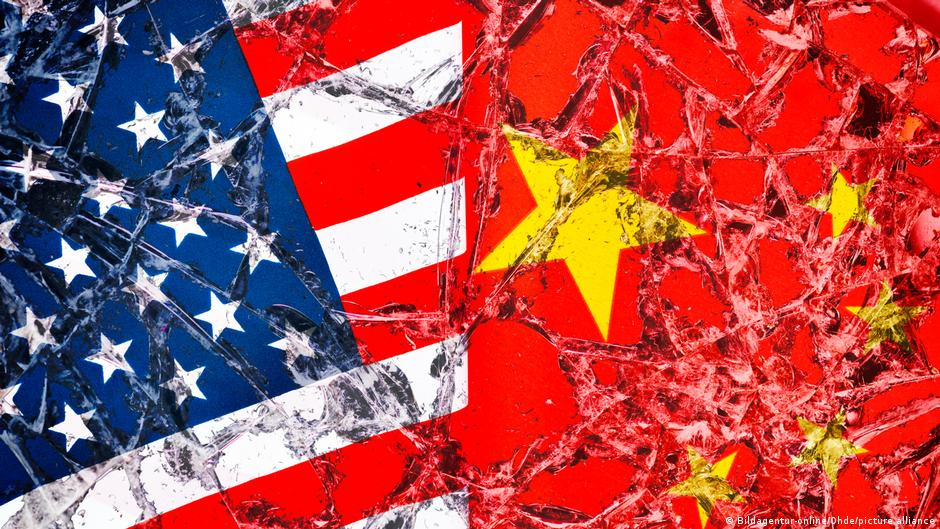
China urged the United States to stop preparing for war in space after Washington made its first official confirmation that it has weapons systems deployed in orbit, a disclosure that adds a new layer of geopolitical risk for markets tracking defense, satellite infrastructure and space-security exposure.
The warning came from China’s Ministry of Foreign Affairs on Tuesday, September 15, after the U.S. Space Force said it had orbit-based capabilities that could be used for both defense and offense. The U.S. statement specifically cited threats in space from China and Russia, placing military activity beyond Earth’s atmosphere more firmly into the live risk map followed by investors, policymakers and strategic industries.
At a briefing, ministry spokesperson Guo Jiakun cautioned against the “militarization of space,” the transformation of space into a battlefield, and an arms race in outer space. He called on Washington to halt the buildup of military capabilities and preparations for conflict beyond Earth.
“We urge the U.S. side to stop expanding military capabilities and preparing for war in space,” Guo said.
The comments followed remarks a day earlier by U.S. Air Force Secretary Troy Meink, who said on September 14 that the United States possesses space-control assets already located in orbit. Meink said those assets, held by the U.S. Space Force, are capable of protecting the joint force from hostile actions. He did not disclose details about the systems themselves.
The acknowledgement is significant because it moves U.S. orbital military capability from inference into official confirmation. For markets, the immediate implication is not a single price signal but a broader shift in the risk environment around aerospace contractors, satellite operators, launch providers, communications infrastructure and companies tied to space situational awareness. The language used by Washington and Beijing points to a sector where military doctrine, strategic deterrence and commercial networks increasingly overlap.
Space Security Moves Higher on the Market Risk Screen
The U.S. Space Force statement said space control includes capabilities needed to ensure control over, and protection of, space. It also said those capabilities may be used for both offensive and defensive purposes and may involve kinetic and non-kinetic means. That framing matters for traders and analysts because it covers a wide spectrum of possible tools, from physical systems to electronic, cyber or other non-kinetic operations.
The Space Force statement also singled out China and Russia. It said China is developing and operating space-action capabilities and counter-space defense systems as part of its military modernization strategy. Russia, the statement said, views space as a theater of military operations and believes dominance in space will be a decisive factor in future conflicts.
The development comes against the backdrop of the U.S. Space Force’s creation in 2019 during Donald Trump’s first presidential term. The branch was established as a separate armed service because of potential threats from Russia and China. Since then, space has moved from a specialized defense topic into a core strategic domain, as satellites have become central to military communications, surveillance, navigation and targeting.
For market participants, the issue is increasingly tied to resilience. Satellites underpin services ranging from military coordination to navigation and communications. Any escalation in anti-satellite capabilities, cyberattacks or interference can affect assumptions about infrastructure security, defense procurement and the value of redundancy in orbital networks. The article’s facts do not point to specific trading volumes or immediate sector rotation, but the event is the kind of geopolitical catalyst that can sharpen attention on defense and space-linked equities.
Outer Space Treaty Leaves Conventional Systems Outside Its Ban
Historically, the most prominent concern around space weapons has been the possibility of nuclear arms being placed in orbit. The 1967 Outer Space Treaty prohibits such deployment. The United States, Russia and China are among its parties. The treaty calls for space exploration to be conducted only for peaceful purposes.
However, the treaty does not apply to conventional weapons placed on satellites or spacecraft. That legal boundary has become more important as states explore military options that fall outside the nuclear prohibition. The current dispute underscores how the strategic focus has shifted from the narrow question of nuclear weapons in space toward a broader contest over satellite vulnerability, interference, cyber operations and the ability to disable an adversary’s space-based infrastructure.
Today, actions such as hacking satellites and jamming their operations are gaining importance. Russia is suspected of developing weapons against Starlink satellites used by the Ukrainian military. Russia, the United States, China and India are also studying possibilities for actions beyond the treaty framework, including strikes against enemy satellites that play an important role in military communications, surveillance and navigation, AFP notes.
The market relevance lies in the direction of travel. As governments describe space as a contested operational domain, investors are likely to follow procurement signals, defense-budget priorities and demand for protected communications, satellite hardening and space-monitoring capabilities. The latest exchange between Beijing and Washington does not itself quantify contracts, spending or market flows. It does, however, mark a clear escalation in official language around orbital weapons and counter-space strategy.
China’s public warning also shows how quickly a technical military disclosure can become a diplomatic flashpoint. With the U.S. confirming orbit-based systems and China warning against preparation for space war, the space-security theme now sits alongside other geopolitical risks that can influence positioning in defense and technology-linked sectors. For real-time market desks, the key takeaway is that space is no longer merely a long-term innovation category. It is increasingly a live strategic arena where military announcements can reshape risk perception across multiple industries.