Trump-Putin Call Planned as Irkutsk Health Reports Put Russia Risk in Focus
Markets are watching for any disruption signals from Russia after WHO sought more information on reports tied to a fatal pneumonia case in Irkutsk.
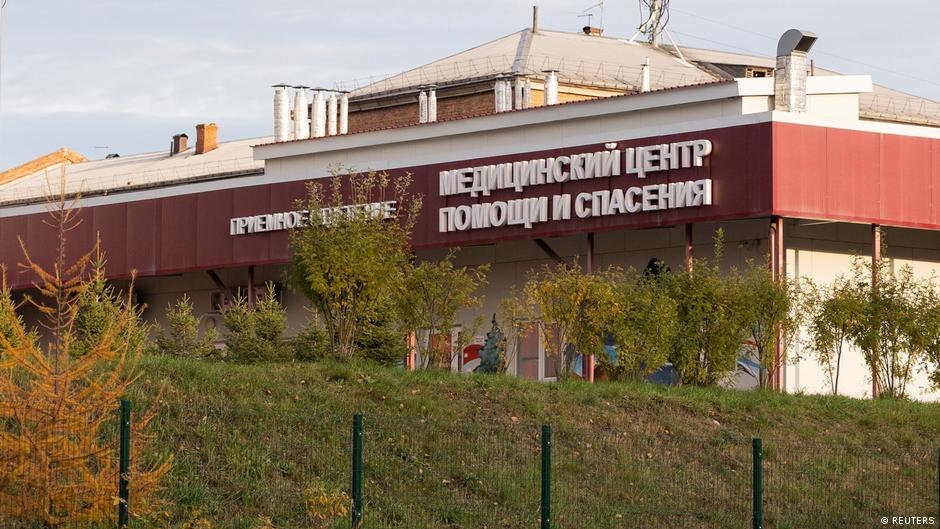
U.S. President Donald Trump plans to speak by phone with Russian President Vladimir Putin as officials and global health authorities assess reports surrounding the death of a 28-year-old laboratory worker in Irkutsk, a development that has drawn attention beyond public health circles because of its potential to affect sentiment toward Russian risk, industrial operations and cross-border monitoring.
The White House said on Tuesday, October 6, that the two leaders have a call scheduled “soon,” after Trump was asked whether he had discussed the Irkutsk incident with Putin. The question followed reports about the possible death of Darya Shipilova, a laboratory assistant at the Irkutsk Anti-Plague Institute, from plague. The incident has not been confirmed by Russian federal health authorities as a plague case.
For markets, the immediate issue is not a verified outbreak, but the speed at which headline risk can move through commodities, industrial supply chains and regional exposure when uncertainty involves a major producer economy. Russia’s energy, metals and transport sectors are highly sensitive to operational restrictions, quarantine measures and public health controls, even when the underlying risk remains unclear.
WHO seeks clarification as Russia denies recent plague cases
World Health Organization Director-General Tedros Adhanom Ghebreyesus said late on October 7 on X that the WHO is in contact with Russian health authorities and has offered technical support. He said Russian health authorities told the WHO, in response to its request, that no plague cases had recently been registered in the Irkutsk region.
Russian health authorities informed the WHO that an epidemiological investigation had been carried out, preventive and control measures had been taken, and identified contacts had been placed under medical observation and tested.
According to Ghebreyesus, Russian authorities also told the WHO that no high-threat pathogens had been detected among the contacts and that medical monitoring of all identified contacts had been completed. In the same post, he said the WHO had requested additional information to clarify the cause of the severe pneumonia, the pathogen that prompted public health measures, and media reports about a second employee with pneumonia of unknown origin.
That request keeps the story active for investors because it leaves several key questions unresolved: the cause of death, whether any pathogen of concern was involved, whether a second employee was affected, and whether local restrictions are precautionary or tied to a confirmed biological risk. In real-time trading, the absence of confirmation can still shape positioning when the asset class is exposed to Russian policy, logistics or industrial production.
Trump says U.S. is monitoring events in Russia
Trump had already addressed the issue on October 5, saying the United States was “watching very closely” what was happening in Russia. Asked whether the White House would respond to the reports from Russia, he said the U.S. had just heard about the matter and that Russian authorities were calling it pneumonia. He added that pneumonia used to be easier to treat, but that microbes and bacteria had become disproportionately stronger, and said the U.S. would help Russia.
The planned Trump-Putin call brings a geopolitical layer to what began as a regional health report. For market participants, the involvement of the U.S. president and the WHO raises the probability that trading desks will monitor official statements for any indication of cooperation, travel-related measures, emergency health protocols or disruptions around facilities in the region.
Shipilova died during the night of October 2 at the Shelekhov district hospital in Irkutsk region. Alexei Tsydenov, the head of neighboring Buryatia, wrote on Max that the cause of her death was plague. He later edited the post to add the word “possibly.” That edit is important for investors tracking headline reliability: the initial claim helped push the story into wider circulation, while the revised wording underscored that the diagnosis remained uncertain.
Russia’s consumer health watchdog, Rospotrebnadzor, said the deceased woman had been diagnosed with pneumonia of unknown cause. Irkutsk region Governor Igor Kobzev said there was suspicion of a “particularly dangerous infection,” but did not name the suspected diagnosis.
The local outlet Lyudi Baikala reported on October 4 that Irkutsk city clinical hospitals No. 1, 3 and 10 had been closed for quarantine, along with a maternity hospital and the Ivano-Matreninskaya children’s clinical hospital. The same report said a mask regime was being introduced at the Irkutsk Aluminum Plant, or IrkAZ, in Shelekhov, after the plant’s director Artyom Fominykh announced the measure the previous day.
Those local details are the closest direct link to market-relevant operations in the source material. Aluminum and industrial production are sectors where even precautionary health measures can attract attention from traders if they hint at labor restrictions, transport delays or tighter workplace protocols. The source material does not report production stoppages, trading volumes, price moves or supply losses, so any market reaction remains a matter of monitoring rather than confirmed disruption.
For now, the live market signal is uncertainty rather than a verified event. The WHO says Russia has reported no recent plague cases in Irkutsk region, while also seeking more information about the severe pneumonia case and reports of another employee with pneumonia of unknown origin. Trump’s expected call with Putin keeps the issue on the global policy calendar, and investors are likely to watch for official updates from Moscow, Washington and the WHO before repricing sector or country risk around the reports.