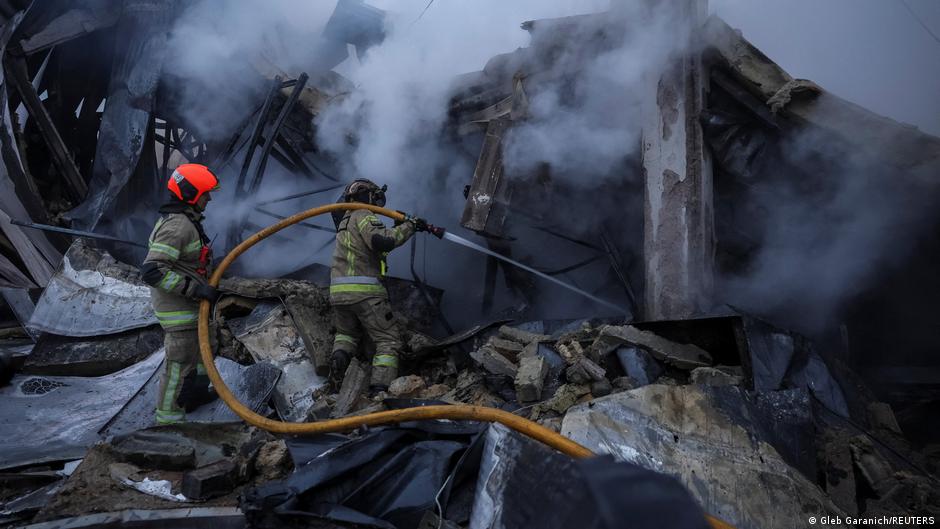
Russian Drone Strike on Kharkiv Homes Injures Four, Raises Risk Alert
The overnight attack damaged residential and industrial buildings as further aerial threats persisted across several Ukrainian regions.
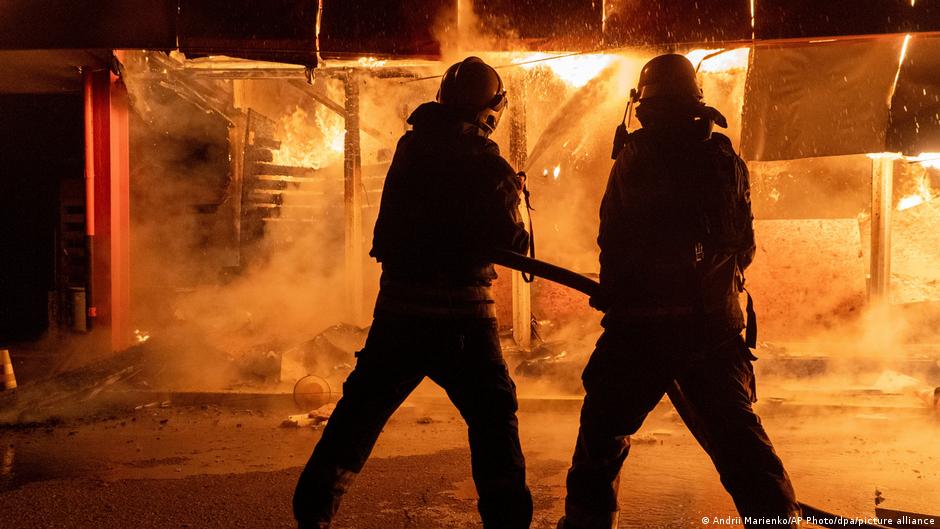
A Russian drone struck a residential building in Kharkiv overnight, injuring four people, including a four-year-old boy, as attacks involving unmanned aircraft and guided bombs continued toward multiple Ukrainian regions.
The strike hit the Osnovianskyi district of Kharkiv during the night leading into Wednesday, October 28. Fires broke out in a two-story industrial building, a two-story apartment block and a single-story home, according to Oleh Syniehubov, head of the Kharkiv regional military administration.
Syniehubov later said the injured were two women aged 32 and 65, a 56-year-old man and the four-year-old child. Three of the four required hospitalization. No further information about their conditions was provided.
Kharkiv Mayor Ihor Terekhov also reported that a Russian unmanned aerial vehicle had hit an apartment building. His initial account indicated that people were trapped inside the structure.
“A hit on a residential apartment building. According to the available information, people are trapped inside,” Terekhov wrote.
Industrial Fire Adds to Immediate Operational Risk
The reported fire at a two-story production facility adds an industrial dimension to the overnight damage, although authorities did not identify the site, describe its operations or provide an estimate of losses. The available statements also did not specify whether production had been interrupted or whether nearby transport, power or other infrastructure had been affected.
For markets monitoring the war in real time, the event reinforces the continuing security risk surrounding Kharkiv, a major city and industrial center in northeastern Ukraine. The reports did not include data on trading volumes, commodity prices, sector performance or immediate financial-market moves linked to the attack. Any direct economic impact therefore remained unquantified in the initial official updates.
The absence of an early damage estimate limits the ability to assess potential effects on companies, supply chains or regional output. Investors and businesses exposed to Ukraine typically watch attacks on industrial property for signs of production stoppages, logistics disruption and additional reconstruction costs. In this case, officials confirmed the production-building fire but did not name an operator or connect the incident to a specific commercial sector.
Threat Alerts Extended Beyond Kharkiv
At the same time, the Ukrainian Air Force warned of a possible ballistic-weapons threat from the direction of Bryansk toward Kyiv. That warning was subsequently lifted, according to the source reports.
The broader aerial threat did not end with the cancellation of the ballistic alert. Messages published through the Ukrainian Air Force’s Telegram channel said attacks involving jet-powered unmanned aerial vehicles and guided aerial bombs continued in the direction of the Kharkiv and Dnipropetrovsk regions, as well as Kyiv and the surrounding region.
The simultaneous warnings across several areas underscore the fluid nature of the overnight security situation. They also widen the geographic scope being watched by companies and traders for possible effects on industrial operations, electricity supplies and freight routes. However, the official reports cited no confirmed damage in Kyiv or the Dnipropetrovsk region from those continuing threats.
The strike in Kharkiv represents a breaking security event rather than a confirmed market-moving development. No evidence was provided of a shutdown at a named business, damage to nationally significant infrastructure or disruption to commodity exports. The immediate verified consequences were four injuries, fires affecting residential and industrial buildings, and continuing aerial alerts across several regions.
Further official assessments will be needed to establish the extent of damage to the production facility and residential properties. Those updates may clarify whether the incident has consequences beyond the emergency response, including any effect on local employment, manufacturing activity, utilities or transportation.
Until then, the principal market signal is an elevated operational-risk backdrop rather than a measurable shift in asset prices or sector flows. The latest attack shows that residential districts and industrial premises in Kharkiv remain exposed while aerial operations continue across a broader portion of Ukraine.