Fire Reported at Sasta Plant Site Hosting Yandex Data Center in Ryazan
Astra said OSINT analysis placed the fire at the Sasta machine-tool plant in Sasovo, where a Yandex DC data center is located.
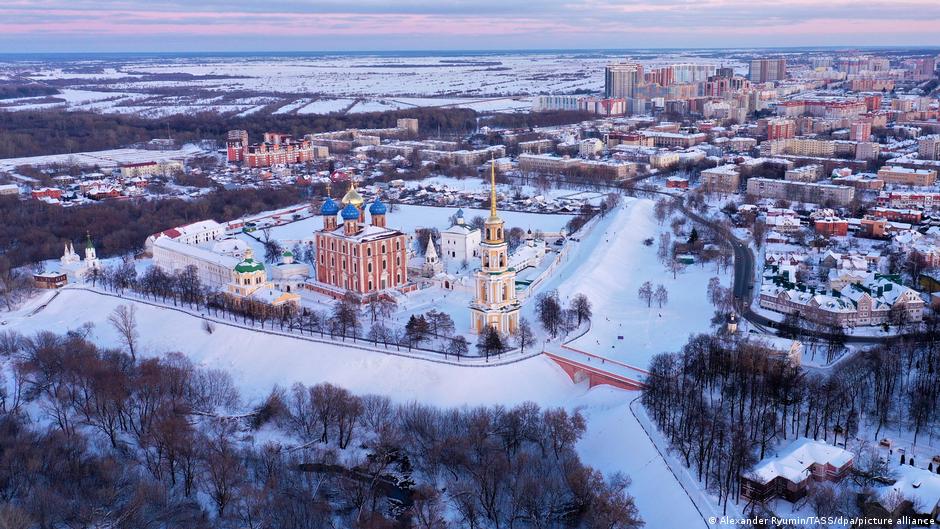
A fire broke out in Sasovo in Russia’s Ryazan region on the grounds of the Sasta plant, a site that also hosts a data center operated by Yandex DC, according to the Russian-language outlet Astra. For market participants tracking Russian technology infrastructure, cloud resilience, industrial capacity and sanctions exposure, the report puts a sensitive asset cluster into focus: a data-center location positioned alongside a machine-tool producer whose equipment is used across defense, aerospace, transport and heavy industry.
Astra said its assessment was based on OSINT analysis. The outlet wrote that the fire began on the territory of the Sasta machine-building plant, where the data center of Yandex DC LLC is located. The report was published on Astra’s Telegram channel during the night of Thursday, October 8.
“Last month, the data-center employees themselves showed its equipment and directly stated that it is located in Sasovo in the Ryazan region,” Astra wrote.
The immediate market relevance centers on operational continuity rather than confirmed financial impact. Astra later noted a message about power-supply disruptions affecting a separate availability zone of the Yandex Cloud platform. According to the source article, about 40 minutes after the initial disruption messages appeared, the Yandex Cloud team reported that the situation had stabilized.
That timing matters for traders and infrastructure analysts because cloud availability-zone incidents can quickly become a read-through for enterprise service reliability, even when the outage is short-lived. The source does not state that the reported fire caused the Yandex Cloud disruption, and it does not provide damage estimates, casualty figures, trading-volume data or a company financial assessment. Still, the sequence described by Astra may draw attention from investors and counterparties watching Russian data-center operations, cloud-service continuity and the concentration of digital infrastructure near industrial facilities.
Industrial Site Adds Sanctions and Sector-Rotation Context
The Sasta plant, according to Astra, specializes in the production of metalworking machine tools with CNC, or computer numerical control. Astra reported that its equipment is used in the defense, aerospace, transport and heavy-industry sectors. That industrial profile gives the incident a broader market-intelligence angle beyond data-center availability: machine-tool capacity is a critical input for precision manufacturing, and any disruption at such a site can be monitored as part of defense-industrial and capital-goods risk.
Astra wrote that Sasta’s importance to Russia’s military-industrial complex lies not in making finished weapons, but in supporting the production base. The outlet said the company’s machine tools are needed to produce high-precision metal parts and assemblies.
The plant is also under sanctions, according to the source article. Astra noted that the enterprise is subject to sanctions by Canada, Switzerland, the European Union, the United Kingdom, Australia, New Zealand and Japan. For market desks, that sanctions footprint can affect how an incident is interpreted across multiple baskets: Russia-linked industrial exposure, dual-use manufacturing supply chains, cloud infrastructure, and geopolitical risk premiums tied to critical assets.
No securities-price moves, exchange statements, order-book shifts or official trading-volume data were included in the source article. The live-market relevance therefore rests on headline risk and the potential for sector rotation in exposed themes rather than on reported price action. In a breaking-news setting, traders would typically watch for official confirmation, company statements, cloud-status updates, satellite or local emergency-service information, and any follow-on disruption to customers using the relevant availability zone.
Cloud Resilience Becomes a Live Risk Marker
The report comes against a backdrop of heightened attention to telecommunications and data-center infrastructure in the region. The source article recalled that on the evening of September 25, Russian armed forces began striking infrastructure belonging to the Ukrainian telecom operator Cosmonova, including a data center. As a result, internet and television disruptions occurred in Kyiv, according to the article.
On October 3, Ukrainian President Volodymyr Zelensky commented on strikes against Ukrainian data centers. The source article quoted him as saying that data centers and mobile communications affect people and are not military infrastructure. He added that communications services are used not only in Ukraine but also in Moscow.
For markets, the comparison is significant because it frames data centers as both commercial infrastructure and geopolitical risk assets. Cloud facilities support business continuity, communications, media distribution and digital services. Any verified interruption can have knock-on consequences for customers, counterparties and service-level expectations, even if an individual incident is resolved quickly.
In this case, the only stabilization detail in the source is that the Yandex Cloud team said the situation had stabilized 40 minutes after the reported disruption notices appeared. The article does not say whether all services were affected, whether customers experienced material losses, or whether the incident had a direct connection to the fire on the Sasta grounds.
The report also does not include a response from Sasta, Yandex DC, Yandex Cloud, local emergency authorities or sanctions agencies. Until those details are available, the key market signal is one of infrastructure sensitivity: a sanctioned industrial site, a data-center presence, and a short-lived cloud availability-zone issue appearing in the same breaking-news cycle.
For real-time market monitoring, the watchlist is clear. Investors and analysts are likely to track whether additional cloud-status updates emerge, whether local officials confirm the location and scale of the fire, whether damage to plant or data-center assets is reported, and whether Russian industrial or technology names face renewed headline pressure. In the absence of confirmed financial metrics, the story remains a live risk event rather than a quantified market shock.