AfD Expels Politician Known for Imitating Hitler’s Speech at Party Congress
Alexander Eichwald was expelled from Germany’s right-wing AfD party following a controversial speech mimicking Hitler’s mannerisms.
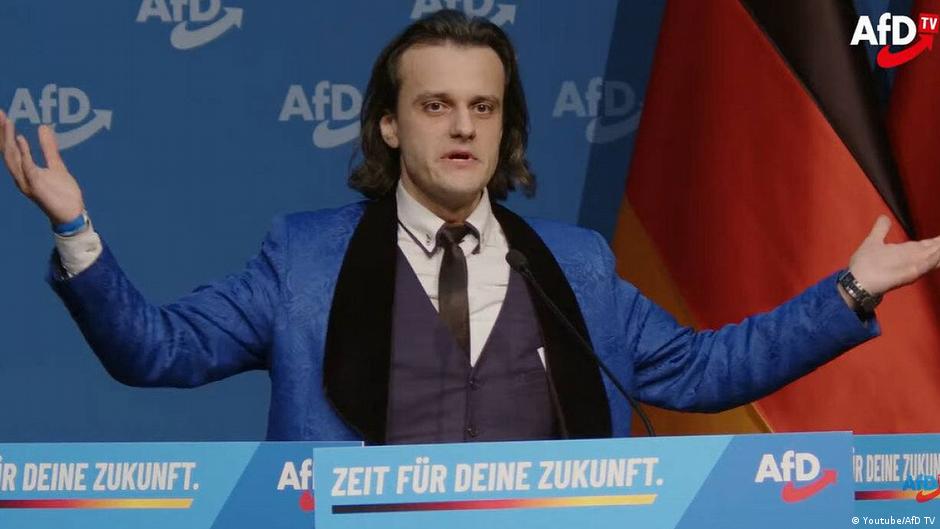
Alexander Eichwald, a 30-year-old politician of Russian-German origin, has been expelled from the Alternative for Germany (AfD) party after delivering a speech that resembled Adolf Hitler's notorious speaking style. The disciplinary court of the right-wing populist party made the decision amid accusations that his behavior gravely damaged the party's image.
According to party representatives, Eichwald retains the right to appeal this ruling at the federal arbitration court of the AfD. Eichwald himself has stated his intention to contest the expulsion, emphasizing that he already submitted a written defense and did not attend the disciplinary hearing.
Controversial Speech Sparks Outrage
The controversy began in late November 2025 during the founding assembly of the AfD youth wing “Generation Germany” in North Rhine-Westphalia. Eichwald's presentation featured exaggerated gestures and speech patterns, notably his elongated pronunciations and rolling of the letter “r” in a tone reminiscent of Hitler's speeches.
“My speech was a planned action to hold up a mirror to society and expose the presence of neo-Nazis within AfD leadership,” Eichwald remarked following the backlash.
Initially, Eichwald attributed his distinctive vocal delivery to his Russian upbringing. He explained that he moved from Rostov-on-Don to Germany at the age of nine and learned German through songs by the band Rammstein. Media reports note that while he has an accent in everyday conversation, his recorded speeches do not replicate the exact Hitler-like pronunciation he used at the congress.
The politician later clarified that his performance was not meant as parody or satire but as a portrayal of a persona designed to highlight extremism within the party. Eichwald compared contemporary Germany to the Weimar Republic era, warning against the rise of extremist ideologies akin to those that led to Hitler’s ascendancy.
Internal Party Reactions and Broader Implications
The AfD leadership condemned Eichwald's behavior as seriously damaging to the party’s reputation. Notably, co-leader Alice Weidel, who sparked controversy herself by referring to Hitler and Stalin as "spiritual brothers" earlier in 2025, was criticized by Eichwald. He described her comments as a "slap in the face" for Russian Germans and an attempt to downplay the atrocities committed against Slavic peoples during World War II.
In the days preceding his expulsion, Eichwald further criticized the AfD, posting a half-hour video on YouTube where he repeated the controversial speech patterns and declared his willingness to perform it again, underscoring his commitment to his message.
This incident adds another layer of complexity to the AfD’s ongoing struggle with accusations of harboring extremist elements. The party, which has sought to expand its voter base amid shifting sector rotations and market anxieties related to German and European politics, faces renewed scrutiny that could influence investor sentiment and market confidence in Germany’s political stability.
Market observers will likely monitor how such internal conflicts within the AfD and broader political turbulence in Germany might affect market movements, particularly within sectors sensitive to political risk and regulatory changes.