Putin says Armenia’s EU accession bid would amount to exit from EAEU
Russia’s president told Armenia’s prime minister that pursuing EU entry is incompatible with membership in the Eurasian Economic Union.
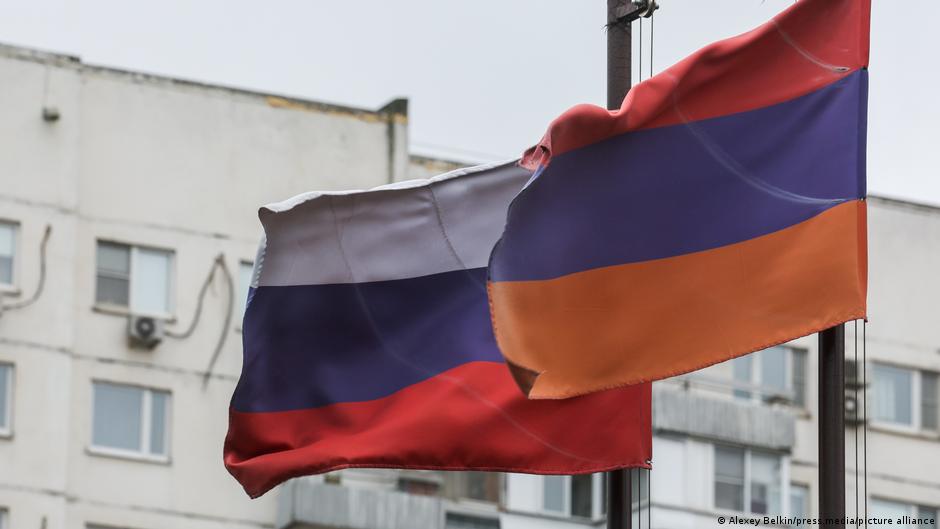
Russian President Vladimir Putin told Armenian Prime Minister Nikol Pashinyan that Armenia’s move toward European Union membership would, in practical terms, mean leaving the Eurasian Economic Union, sharpening a policy dispute with potential implications for regional trade alignment and investor sentiment.
The exchange took place during a meeting on the sidelines of the Shanghai Cooperation Organisation summit in Bishkek. According to a Kremlin transcript published on Tuesday, September 1, the central issue in the talks was Yerevan’s plan to submit an application to join the EU.
For markets watching the South Caucasus and the wider post-Soviet economic space, the comments underscore the growing tension between Armenia’s European integration push and its current position inside the Russia-led EAEU. That raises questions over the future direction of Armenia’s trade framework, supply relationships and regulatory alignment, even as Yerevan insists it has not breached any existing commitments.
“You said that you had not declared an exit. The adoption of a law on the start of the procedure for joining another economic organisation in fact means a declaration of exit from ours, because being there and there is incompatible. That is the problem,” Putin said, according to the Kremlin transcript.
In Putin’s remarks, the “other organisation” was the European Union, while “ours” referred to the Eurasian Economic Union. He again urged Armenia to hold a referendum on a choice between the EU and the EAEU, saying the authorities should “turn to the people” and ask them directly.
Pashinyan rejected the argument that Armenia had violated its obligations. He said Yerevan had analysed the treaty base governing relations between Russia and Armenia, as well as the legal framework operating within the EAEU, and had found no breaches of Armenia’s commitments to either Russia or the bloc.
The Armenian prime minister also said that with the adoption in 2025 of a law on European integration, Armenia had effectively ruled out a referendum on choosing between the EU and the EAEU. That position marks a significant political signal for investors and businesses tracking Armenia’s long-term economic orientation, even if no immediate institutional change has been announced.
EU track collides with Russia-led bloc membership
Pashinyan said on August 24 that Armenia intended in the near future to begin the process of submitting an application for EU membership. After that announcement, the European Commission said Armenia was now “closer to the European Union than ever before,” while also stressing that accession takes place within a “clearly defined, merit-based process.”
That formulation from Brussels leaves the timing and substance of any next steps uncertain, but it also confirms that Armenia’s European course is being taken seriously at the political level. For traders and corporate decision-makers, the immediate issue is less about accession timing and more about whether Moscow and Yerevan continue to diverge over what Armenia’s legal and economic choices mean in practice.
Putin has previously argued that EU membership and EAEU membership cannot be combined. He has also said that the so-called “Ukrainian scenario” began with Kyiv’s attempt to join the EU. By repeating that incompatibility argument directly to Pashinyan, Putin placed the dispute firmly in the context of competing regional economic architectures rather than a narrow legal disagreement.
Pashinyan, however, has maintained a different line. In June, he said there were no grounds for holding a referendum on joining the EU. That statement came in response to a joint declaration by the leaders of Russia, Belarus, Kazakhstan and Kyrgyzstan, showing that the issue had already become a broader concern inside the EAEU before this week’s face-to-face exchange in Bishkek.
The latest meeting therefore appears to formalise an open disagreement that had been building for months. For market participants, that matters because membership in economic blocs shapes tariff regimes, customs procedures, standards recognition and the political risk environment surrounding cross-border trade.
While neither side announced a concrete break, the rhetoric suggests that Armenia’s strategic balancing room may be narrowing. Putin framed the matter as one of incompatibility. Pashinyan framed it as one of legal compliance. That gap is likely to remain central to how investors assess Armenia’s regional positioning.
Pressure from Moscow before Armenian vote
The political backdrop is also relevant. Ahead of Armenia’s parliamentary elections on June 7, Moscow increased pressure on Yerevan, including by banning imports into Russia of several Armenian products, according to the source text. The episode added an economic dimension to already strained political ties and highlighted the leverage that trade restrictions can exert during periods of diplomatic friction.
Pashinyan’s Civil Contract party went on to win those elections. His in-person meeting with Putin on September 1 in Bishkek was the first between the two leaders since that vote, making the discussion over EU accession all the more significant.
For markets, the sequence matters: election pressure, trade restrictions, a renewed EU push by Yerevan, and now a direct warning from Moscow that an accession process would amount to an exit from the EAEU. Even without fresh sanctions, tariff changes or institutional decisions, that progression is likely to keep Armenia on the radar for anyone tracking regional trade exposure and political risk.
At this stage, the core facts remain straightforward. Russia says that starting a path toward EU membership is incompatible with remaining in the EAEU. Armenia says it has reviewed the governing legal framework and found no violation of its obligations. Brussels says Armenia is closer than ever, but that accession follows a defined, merit-based process.
That leaves a widening policy gap but no immediate resolution. The near-term market takeaway is not a formal rupture, but a clearer signal that Armenia’s westward political and economic ambitions are now colliding more directly with Moscow’s view of the limits of dual alignment.