Iran Implements New Vessel Information Declaration for Strait of Hormuz Transit
Iran mandates detailed vessel data submissions from tanker operators for passage through the strategic Strait of Hormuz.
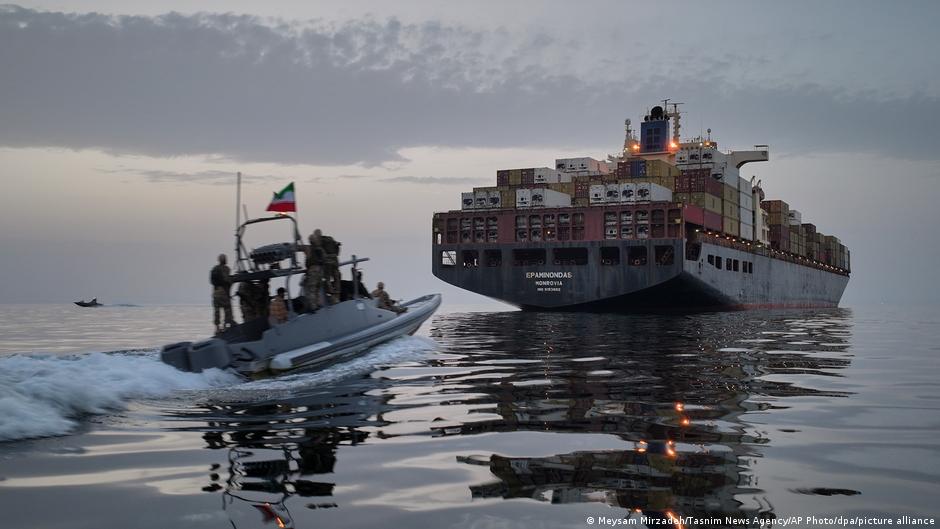
On May 5, Iran's Persian Gulf Strait Administration (PGSA) introduced a comprehensive "Declaration of Vessel Information" that shipping companies must complete prior to navigating tankers through the Strait of Hormuz. The declaration, comprising over 40 questions, aims to enhance oversight of maritime traffic through this crucial energy chokepoint.
The mandatory form requires detailed information including the vessel's name, identification number, former names, country of origin, and intended destination port. Additionally, operators must disclose the nationality of owners, operators, and crew members, alongside an exhaustive description of the cargo onboard.
All data must be electronically submitted to the PGSA before the vessel transits the narrow passage. The administration emphasized that the submitting party bears full responsibility for the accuracy and completeness of the information supplied, with accountability for any resulting consequences.
Potential Financial Implications and U.S. Restrictions
While the declaration does not explicitly introduce transit fees, previous Iranian government statements have indicated that charging vessels could generate revenue for post-conflict reconstruction efforts. Reports suggest that currently, Iran may charge up to $2 million per vessel passage.
Nonetheless, any payments to the Iranian government or its Islamic Revolutionary Guard Corps (IRGC) related to Strait of Hormuz transit are strictly prohibited for U.S. persons, including American financial institutions and U.S.-controlled foreign entities. The U.S. Treasury Department clarified that such transactions would violate sanctions.
"Payments to the Iranian government or IRGC for safe passage through the Strait of Hormuz are forbidden for U.S. persons or affiliated entities," a U.S. Treasury spokesperson stated.
Geopolitical Context: U.S. Naval Operation and Diplomatic Developments
These new Iranian regulations come amid heightened tensions and U.S. military operations in the region. On May 4, the United States launched the "Operation Project Freedom," deploying naval forces to escort commercial ships through the Strait to deter potential attacks. U.S. President Donald Trump warned Iran of retaliatory measures should American vessels be targeted.
Secretary of State Marco Rubio described the operation as purely defensive, emphasizing that no shooting would occur unless the U.S. was fired upon first. However, on the night of May 6, President Trump announced a temporary pause to "Operation Project Freedom" to assess ongoing diplomatic efforts, citing requests from Pakistan and other countries to finalize a potential agreement with Iran.
This declaration and the surrounding geopolitical maneuvers illustrate the complex interplay between maritime security, international trade routes, and diplomatic negotiations in a region critical to global energy markets.