Foreign Retailers Face Mounting Asset-Control Risks in Russian Market
Temporary management measures against Auchan, Leroy Merlin, Metro and others are reshaping investor risk around Western retail assets in Russia.
Foreign retail groups with remaining exposure to Russia are facing a sharper asset-control risk as Russian authorities move temporary management arrangements over selected Western-owned businesses from a political concern into an operating reality.
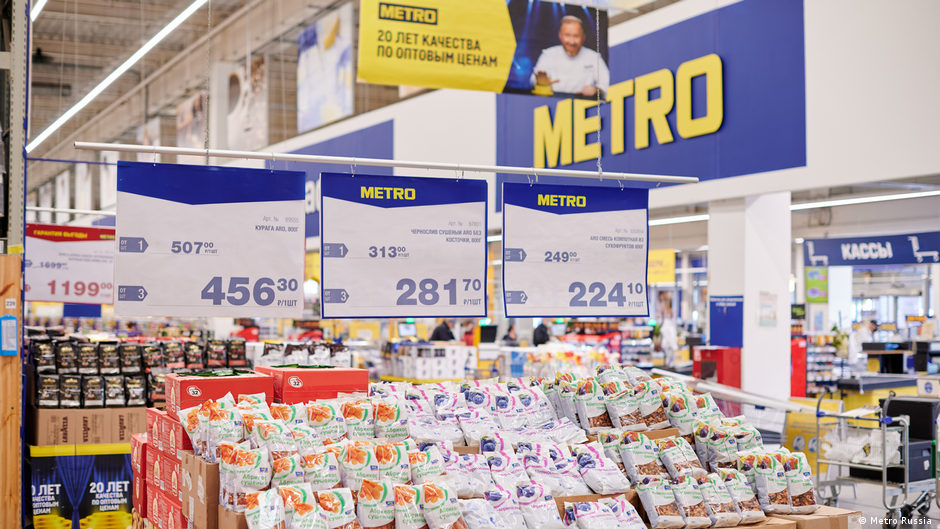
According to the source dossier, several foreign retail chains have already lost the ability to manage their Russian assets directly. Temporary management has been introduced over assets linked to France’s Auchan and Leroy Merlin, Germany’s Metro and other companies. In practical market terms, that means owners have been deprived of access to assets that may still carry brand, real estate, supply-chain and cash-flow value inside Russia.
The development raises the central question for investors and corporate risk managers tracking Russia exposure: whether temporary management is a staging point toward deeper state control or possible nationalization of the Russian businesses of foreign retailers. The dossier frames that risk directly, asking whether nationalization threatens the Russian business of foreign retail companies.
Asset Control Becomes the Key Market Signal
For markets, the immediate signal is not a daily share-price move or a disclosed trading volume figure, but a change in control. Once a company can no longer access or manage its local assets, the economic value of those holdings becomes far harder to price. Retail operations are especially exposed because they depend on working inventories, supplier contracts, store leases, staffing and local banking access.
The cases named in the dossier span major European retail and do-it-yourself brands that had built substantial consumer-facing operations in Russia. Auchan and Leroy Merlin are French-linked retailers, while Metro is German. Their inclusion under temporary management points to continuing pressure on Western corporate assets still connected to the Russian market.
Temporary management does not necessarily mean an announced final transfer of ownership. But for investors, it can function as a break in the chain of control. The owners may remain owners in a formal sense while losing the operational access needed to direct strategy, repatriate value or carry out a negotiated exit.
Foreign retail chains are losing the ability to manage their assets in Russia one after another.
That pattern is the market-relevant element. A single case can be treated as an isolated corporate dispute or policy exception. Multiple cases across large retailers create a sector-wide risk marker for companies that still have Russian operations, legacy subsidiaries or unresolved exit structures.
Globus Turns to a Political Name
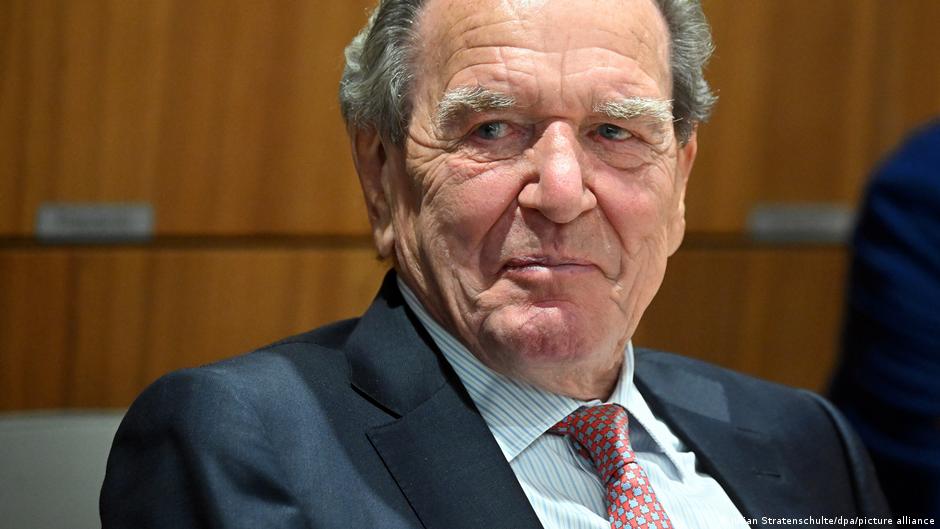
The dossier also highlights a separate but related development involving the former Russian subsidiary of the German holding company Globus. Former German Chancellor Gerhard Schroeder has joined the supervisory board of that former Russian unit.
His presence introduces a different type of signal: the search for protection, influence or reputational cover around assets caught between Western corporate ownership histories and Russian legal and political realities. The source does not state that Schroeder’s role changes ownership or control, and it does not provide financial terms. The important point is that a high-profile former political figure has entered the governance structure of a company formerly tied to a German retail group.
For market observers, that kind of appointment can be read as part of the broader defensive toolkit surrounding foreign-linked assets in Russia. Companies and successor entities may seek governance figures who can help navigate political, regulatory and stakeholder pressure. The dossier’s framing places the Globus development alongside the temporary management measures affecting other retailers, suggesting a common theme: foreign retail assets in Russia are being reshaped through control mechanisms and protective arrangements.
Retail Exposure Moves From Operating Risk to Sovereign Risk
The Russian retail market was once viewed by many European groups as a consumer-growth opportunity. The current dossier presents a very different risk profile. The main issue is no longer store traffic, category performance or local demand. It is whether owners can still exercise control over their Russian assets at all.
That shift matters for investors across sectors, not only retail. Temporary management over consumer-facing businesses can set expectations for how other foreign-linked assets may be treated. It may also affect how companies value remaining Russian exposure in financial statements, how counterparties assess receivables and how boards approach any unfinished exit process.
The source does not provide transaction values, store counts, revenue figures, market capitalization moves or trading volumes. It also does not state that all foreign retailers in Russia face the same legal outcome. The documented facts are narrower but significant: assets of several named Western retail groups have been placed under temporary management, owners have lost access to them, and Globus’s former Russian subsidiary has added Gerhard Schroeder to its supervisory board.
For real-time market intelligence, the key watchpoints are therefore governance actions rather than conventional retail metrics. Investors will be watching whether temporary management expands to additional companies, whether affected owners receive any route to regain control or compensation, and whether the Russian authorities move from temporary administration toward more permanent ownership changes.
Until those questions are resolved, Western retail assets in Russia remain difficult to value through normal operating assumptions. Control risk has become the dominant variable, and the cases involving Auchan, Leroy Merlin, Metro and Globus show how quickly that risk can move from background concern to the center of the investment story.