Brazil’s Supreme Court Sentences Eduardo Bolsonaro to Prison Amid Political Turmoil
Eduardo Bolsonaro, son of former president Jair Bolsonaro, receives a four-year prison sentence in absentia for lobbying against Brazil’s judiciary.
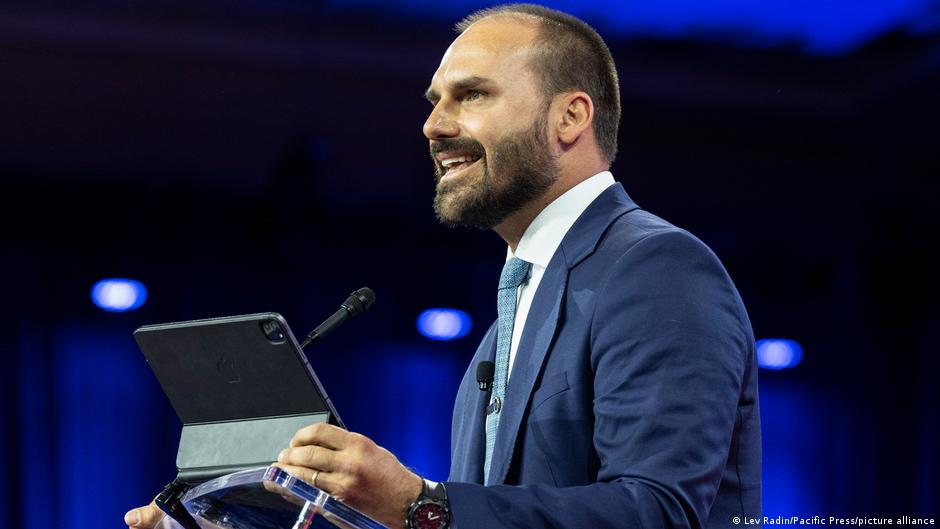
Brazil's Supreme Court has sentenced Eduardo Bolsonaro, son of former President Jair Bolsonaro, to four years and two months in prison. The ruling was issued in absentia since Eduardo currently resides in the United States.
The 41-year-old politician was convicted for urging the U.S. government to impose sanctions on Brazil in response to judicial proceedings against his father. The verdict, handed down on Tuesday, June 16, found that Eduardo Bolsonaro's actions constituted threats against Brazil's judicial authorities and other branches of government.
Judiciary Condemns Foreign Lobbying Against National Interest
Supreme Court Justice Alexandre de Moraes stated that Eduardo Bolsonaro was guilty of "lobbying abroad for interests contrary to those of his own country." Alongside the prison sentence, Eduardo has been barred from holding any public office in Brazil for eight years. He served as a member of Brazil's lower house of Congress from 2015 to 2023.
"Lobbying abroad for interests contrary to those of his own country," was cited as the core reason behind the conviction.
Because the sentence was delivered in absentia, Eduardo Bolsonaro will face arrest upon any return to Brazil.
Eduardo’s father, Jair Bolsonaro, who served as Brazil's president from 2019 to 2023, was convicted in September 2025 of planning a coup attempt and attempting to violently overthrow the government. He received a 27-year and three-month prison sentence.
Looking ahead to Brazil’s upcoming presidential election in October 2026, incumbent President Luiz Inácio Lula da Silva is seeking re-election. Meanwhile, Flávio Bolsonaro, another son of Jair Bolsonaro currently imprisoned, has expressed intentions to run against Lula.
This judicial and political drama unfolds amidst a charged atmosphere of sector rotations and market volatility in Brazil, where political risks continue to impact investor sentiment and trading volumes.